

how to play sorry game board

Master “How to Play Sorry Game Board” Guide

Welcome to our guide on becoming a “Sorry!” board game pro. This classic game is great for all ages. You’ll learn the steps, tips, and strategies needed for winning. “Sorry!” has been a hit since 1934. It evolved from Pachisi, an ancient Indian game. how to play sorry game board?

Your goal is to move your pawns across the board and back to safety. You’ll face choices that can change the game completely.

Key Takeaways

  • “Sorry!” is for 2-4 players, ideal for family fun nights.
  • Win by getting your pawns to the home space with the right dice rolls.
  • It’s all about smart moves and planning your strategies.
  • There are 11 kinds of cards, each with its own rule or action.
  • In 1929, W. H. Storey patented it in the UK. Parker Brothers made it famous in the U.S.

Introduction to the Sorry Game Board

Sorry! was first made in 1934. It mixes luck and strategy, grabbing players’ attention. Now part of Hasbro, this game fits from 2 to 4 players who are 6 and up. Setting up takes between 1 to 5 minutes. But, it’s about more than luck. Counting, thinking ahead, and knowing odds are key. Everyone, young and old, finds it fun to play.

What is Sorry!?

Adapted from Pachisi, Sorry! comes from England thanks to W H Storey & Co. Parker Brothers put it on the map. It’s all about moving your pawns based on the cards you draw. These cards mix things up, keeping the game exciting. Mastery of Sorry’s challenges moves you closer to victory.

The Objective of the Game

By following the Sorry game instructions, the aim is clear. Move all pawns from the start to their houses. Cards can send opponents back, adding to the challenge. A good game plan is key. The deck has 45 cards, each with a special role. These add more fun to the move-your-pawn game.

In 1939, a new way to play was introduced: Point-Scoring Sorry! It puts points at stake, changing how you win. This twist makes the game more competitive.

Game Components and Setup

The Sorry! board game is a classic that brings people together. It’s known for its fun and strategy. Knowing how to set it up and what you need to play is key. Let’s look at the Sorry game board setup and its basic items.

Board and Pawns

The Sorry! board has spaces of different colors and four special start spots. Players get four pawns each in red, blue, green, and yellow. The aim is to move these pawns to the same-colored home spot. You can play with just two people or up to four, which is great for groups of different sizes. Setting up the game is quick, taking only 1-5 minutes usually.

Card Deck

The game includes a deck with 45 cards, but no 6s and 9s. Each card tells you how many spaces to move. They can also let you move backward, switch places with someone, or get to safety. You must draw a 1 or 2 to start moving. The game’s excitement comes from its strategy, like using cards to send others back to the start.

ComponentDetails
BoardColor-coded with start and home spaces
PawnsFour sets of four pawns in red, blue, green, and yellow
Card Deck44 cards with movements, excluding 6s and 9s
Players2-4 players with a setup time of 1-5 minutes
Age Range6 and up

These game items and easy setup help players start the fun quickly. Whether you’re with family or friends, Sorry! is always a fun, competitive game to enjoy.

Basic Rules of How to Play Sorry Game Board
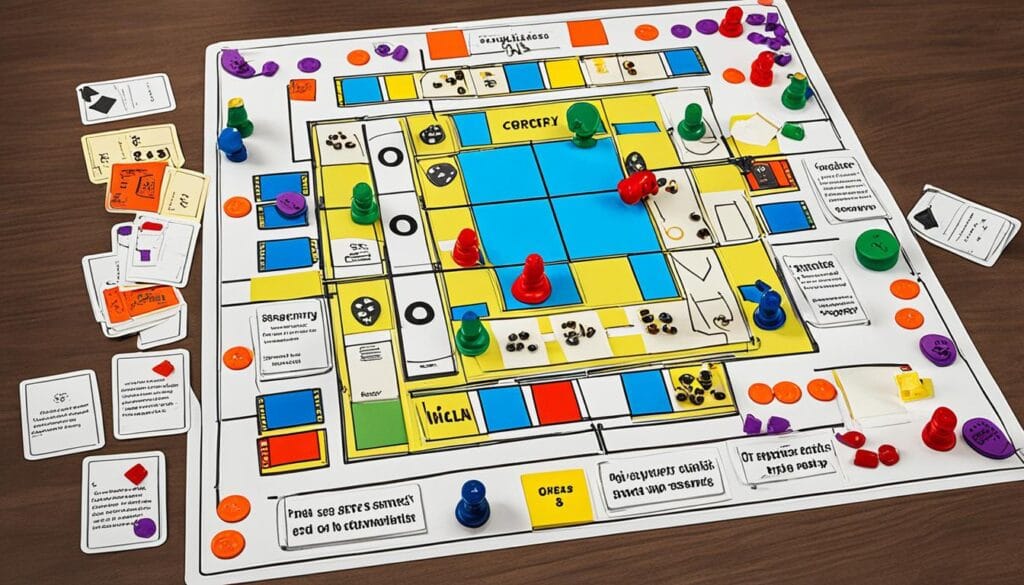
how to play Sorry game board

Learning to play the Sorry game board starts with the basics. It’s made for 2-4 players, with each player having four pawns in different colors. You’ll try to get all your pawns home from the start, working through the board’s challenges.

Starting the Game

To begin, players pick who goes first. It might be done by age or by chance. They draw a 1 or 2 card to start moving their pawns out. Getting a 2 lets them draw another card for extra action.

Drawing and Playing Cards

During your turn, draw a card and follow what it says. The deck has 11 different types of cards, each doing something special. Remember, you must follow the card’s rules on your turn. If you can’t move, you miss your turn.

If you land on another player’s pawn, they go back to the start. This adds an exciting competitive twist. Players can also find safety in certain zones on the board, helping on their way home.

It’s key to use the board’s special features smartly. By knowing how to play, you can make your moves count. This will lead you to win by getting your pawns home first.

Different Types of Cards and Their Functions

In the game “Sorry!”, the card deck is key. It decides how players move and plan their strategies. Knowing each card and what they do is vital to win and create a solid strategy.

Numbered Cards

There are 45 cards in the Sorry! deck. They include various numbered cards with special actions:

  • 1: Move a pawn ahead one space or start a pawn from the “Start” area.
  • 2: Move a pawn ahead two spaces or start a pawn from “Start” and draw again.
  • 3: Move a pawn ahead three spaces.
  • 4: Move a pawn back four spaces.
  • 5: Move a pawn ahead five spaces.
  • 7: Move a pawn ahead seven spaces or split this move between two pawns.
  • 8: Move a pawn ahead eight spaces.
  • 10: Move a pawn ahead ten spaces or back one space.
  • 11: Move a pawn ahead eleven spaces or swap with an opponent’s pawn, a key move for smart plays.
  • 12: Move a pawn ahead twelve spaces.

Special Cards: Sorry! and More

The deck also has special cards. They can change the game a lot:

  • Sorry! card: With this, you can move any pawn from ‘Start’ to where an opponent is. Then, you send the opponent’s pawn back to their ‘Start’. Using it wisely can really slow down your foes.
  • 2 card: This card’s unique. It lets you move ahead two spaces and draw another card. It’s great for moving fast and planning well.

Knowing how to use these cards is key. From numbered cards to special moves, they all contribute to a good strategy in playing Sorry!

Pawn Movements and Strategies

Sorry board game tactics

Learning how pawns move in Sorry is key. You need to know how they go forward and back. You also must understand how to use them wisely against enemy pawns. This is important for winning at Sorry.

Forward and Backward Movement

In Sorry, pawns can go forward or backward depending on what card you draw. Moving forward gets them closer to the end. But sometimes it’s smart to move backward. This can help you not get bumped by others. Remember, there are 11 different cards. Knowing each one is a big help in your game plan.

Jumping and Bumping Opponents

Jumping over pawns in Sorry is allowed. But if you land where another pawn is, you bump it back to ‘Start.’ This is a key move in the game. Choosing when to jump or when to bump is a big part of your strategy.

Using the safety zone wisely can help protect your pawns. It makes it harder for others to send you back to the start. This can increase your chances of winning. Keeping an eye on where you and your opponents stand is very important in Sorry.

Special Moves and Conditions

how to win at Sorry game

Learning special moves and game conditions can boost your Sorry! board game skills. These aspects add fun and strategy. They’re vital for winning and knowing the rules of Sorry.

Slides and Safety Zones

In Sorry!, slides are super fun to use. Slide ahead to the next colored triangle when you land on one. This sends your opponents’ pawns back. Not only do you move faster, but you also mess up other players’ plans. There are 16 spaces on each side leading to safety zones.

Once your pawn gets into a Safety Zone, it can’t be moved by others. This makes it safe from being sent back. Staying protected is essential in following the Sorry game instructions closely.

Home and Winning the Game

The main aim is to get your pawns to Home in Sorry! You need to draw the exact number to enter Home. This means planning your moves carefully. Special cards and numbers like “Sorry!” and “11” change the game, testing your strategy.

AspectDescription
SlidesMove forward on colored triangles, sending opponents back to start
Safety ZonesProtected paths for pawns near Home, keeping them safe from opponents
WinningDraw the exact number to reach Home; the first to get all pawns Home wins

To succeed in Sorry, master slides, safety zones, and smart move choices. Knowing these rules and playing wisely promise a great game.

Advanced Tactics and Strategies

Learning advanced tactics in Sorry! can take your game to new heights. It involves using cards well and placing pawns strategically. This part of Sorry! is for those who already know the game but want to get better.

Using Cards Effectively

Success in the advanced Sorry board game strategy is all about the cards you draw. Each card has its own benefits and limits. A smart player can use cards, like the “7” card, to move with great precision. This way, you can get closer to finishing. Also, using a “Sorry!” card at the right time can really mess up your opponent’s plans.

Positioning Pawns Strategically

Where you put your pawns is crucial in this strategy. Try placing them where they can block or put pressure on your opponents. Guessing what cards others might have and where they might move is key. This allows you to play more offensively and protect your pawns better.

Expert players make sure their pawns cover the board well but are not too close together. They also know when the best time to move a pawn is. Timing moves well can change the whole game in your favor.

Here is a quick summary of some critical strategies:

StrategyDescription
Card UtilizationUsing cards like “7” and “Sorry!” effectively.
Pawn PositioningPlacing pawns wisely to counter and predict opponents.
Spread Out PawnsKeeping pawns apart to avoid risks.

Using these strategies together can really change how you play Sorry!. It turns challenges into chances to win.

If you want to dive deeper into the game’s strategies, check out the Sorry game strategy guide.

Team Play and Variations

Changing the rules in “Sorry!” can make it more fun. Adding team play rules and new ways to score points boosts excitement. It keeps players on their toes, looking for new strategies to win.

Team Rules

Playing as a team in “Sorry!” adds a new layer. Each team aims to get all their pawns home, working together. You still follow the usual rules, but you can help each other by moving or bumping each other’s pawns. This change makes working together a key to winning.

Point-Scoring Variation

The point-scoring variation makes “Sorry!” a race. Players carefully choose which cards to play, trying to get their pawns home first. You earn points based on when you arrive home, striving to get the most points. This twist mixes speed with strategy, providing a different challenge.

AspectTeam PlayPoint-Scoring Variation
ObjectiveCollaborate to bring all eight pawns homeRace to accumulate the highest score by getting pawns home
RulesRegular rules with the added ability to move or bump partner pawnsPlayers manage card hands, discard, and draw strategically
StrategyCoordinate moves for team advantagePrioritize speed and point accumulation

New ways to play “Sorry!” make every game session feel fresh. Whether you choose team play or the point-scoring twist, these variations promise hours of fun. They keep the game exciting and loved by all.

Expert Tips for How to Win at Sorry Game

To win at Sorry, you need wise moves and a cool head. It’s important to know common mistakes and good tactics. We’ll talk about how to play well to win.

Common Mistakes to Avoid

  • Leaving Pawns on Start Too Long: It’s a big mistake to not get your pawns moving from Start. Try to move with a 1 or 2 early to get ahead.
  • Clustering Pawns Together: Don’t keep your pawns too close. This makes it easy for opponents to send them back to Start.
  • Ignoring Safety Zones: Don’t forget your Safety Zone. It’s a safe place for your pawns. Using it well can save you from big setbacks.
  • Overlooking Card Count: Count the cards to get ahead. Since the deck isn’t huge, knowing which cards are out there gives you an edge.

Proven Winning Strategies

  1. Spread Your Pawns: Move your pawns around to cover more ground. This way, you won’t lose too much if one pawn gets sent back. Plus, you can keep moving forward.
  2. Control Entry to Safety Zones: Put your pawns smartly in your Safety Zone’s path. This way, you protect your own pawns while blocking your opponents.
  3. Retain Key Cards: Keep important cards like 1s, 2s, and Sorry! cards. They help you and can stop your opponents from winning.
  4. Negotiate and Align with Opponents: Talking to other players can keep you safe. Discuss how to manage common threats. This can help both advance your strategies while you stay off others’ radars.

Focusing on these expert tips can make you a better Sorry player. It’s all about thinking smart and making good moves. This turns the Sorry game into a challenging and fun contest.

Common Rules Clarifications

Playing “Sorry!” can lead to confusion with certain special cards and rules. We’ve put together these clarifications to make the game clearer.

Situations Involving Special Cards

The Sorry! game rules can be confusing, especially with special cards like the Eleven-card. This card lets you switch a pawn with your opponent’s. But, you can’t do this if the opponent’s pawn is in a Safety Zone.

The Sorry-card is also tricky. It lets you move an opponent’s pawn back to the Start. And then, you place your own pawn in its spot.

Pawns in Safety Zones

Safety Zones in “Sorry!” protect pawns from being moved by opponents. It’s important to remember that once a pawn is in a Safety Zone, it’s safe from removal.

Landing on a slide of the same color sends all other pawns on the slide back. But, those in Safety Zones stay where they are.

For the best understanding, always look at the full game rules. This helps to avoid any confusion and to fully enjoy the game.

Variants of the Sorry Game

Over time, “Sorry!” has seen many changes to its rules. The classic version is still loved for its simplicity. However, newer versions add twists that bring more fun and strategy. This article will compare the old rules with the new and talk about how you can mix things up.

Classic Rules vs Modern Rules

The traditional Sorry! rules were set down in 1934. Companies like Parker Brothers and Winning Moves Games USA made sure this classic was easy to learn and quick to play. Players draw cards to move their pawns around the board, trying to get them home. You can move forward, backward, or switch places with other pawns as you roll the dice and draw cards.

Modern versions, however, use a 45-card deck with new actions. Players can now score points and use tactics to manage their hands. Point-scoring rules like the ones in the 1939 edition have made a comeback. And new cards like the Two-card and Ten-card bring added depth to the game. You need to plan your moves more carefully now.

House Rules and Customizations

Players often create house rules to make Sorry! more personal. These rules can change how pawns move, how cards are drawn, or how you win. Making these changes keeps the game fresh and fun for everyone. It’s a way to put your own stamp on the classic game.

Customizations breathe new life into Sorry! Even those who have played for years can find renewed excitement. Mixing the classic game with your own ideas and tweaks ensures everyone enjoys playing. It’s all about blending the old with the new, just the way you like it.

FAQ

What is Sorry!?

“Sorry!” is a fun board game that comes from the ancient game Pachisi. It was made popular by Parker Brothers, now part of Hasbro. The goal is to move your pawns around the board and get them to safety.

What is the objective of the Sorry game board?

The goal is to be first to move all your pawns to your home space. But, it’s not easy because you have to move them while following card rules.

What components are included in the Sorry board game?

You get a game board, pawns, and a card deck. The deck has cards from 1 to 12, but it doesn’t have 6 or 9 cards.

How do you set up the Sorry game board?

First, choose a color for your pawns and put them on the start spot of that color. Then, shuffle the deck for drawing. Finally, see who goes first.

How does a pawn exit the “Start” space in Sorry!?

Move a pawn out of “Start” by picking a 1 or 2 card. If you get a 2, you can draw another card.

What are the functions of numbered cards in Sorry!?

Cards 1 to 12 help you move your pawns. They say how far to move and if you can go forward or back.

What special actions do the Sorry! cards enable?

The “Sorry!” card lets you switch places with an opponent or send their pawn back. Other special cards have unique moves you can make, like switching spots.

How important are strategic movements in Sorry!?

Very important. Using cards well, blocking opponents, and guessing their moves are key tactics. This makes the game more than just luck.

What are slides and safety zones in Sorry!?

Slides help you jump forward and can send back opponents’ pawns. Safety Zones are where only your pawns can go.

How do you win the game of Sorry!?

The first to get all their pawns home wins. You need to use cards wisely and have a little luck too.

Can Sorry! be played in teams?

Yes, there’s a team version. Partners work together to move all eight of their pawns home. The first team to do this wins.

What are some advanced tactics for winning Sorry!?

Keep important cards, spread your pawns out, and be careful about the Safety Zones. How you draw and play cards is also key.

What are common mistakes to avoid in Sorry!?

Don’t leave pawns on start too long or put them all together. This makes them easy for your opponents to attack. Careful card use and pawn position are crucial.

How do the special cards affect gameplay?

Special cards like “Sorry!” and certain numbers let you do big moves. They can change the game in fun and surprising ways.

How do house rules and customizations alter the game?
Changing the rules or adding new ones can make the game your own. It can also make the game harder or more fun.
how to play games on snapchat
How to Play Games on Snapchat
Quick note: Snap Games, the chat-based arcade feature, was discontinued in February 2023. Today, the...
top grossing mobile games 2024
Top Grossing Mobile Games 2024: Trends & Revenue
By 2024 the mobile gaming landscape continued to shift: Honor of Kings remained the top earner globally, generating $1.65 billion (according to Sensor Tower/FoxData), driven largely by its Chinese user base. In the US, Candy Crush Saga held its spot as a leading top grossing game, while Roblox led the UK charts — each title succeeding through proven monetization (in‑app purchases, live events) and strong live‑ops programs. Top Grossing Mobile Games 2024 reflect both regional tastes and savvy business models. China now accounts for the majority of revenue for many hits: PUBG Mobile and Genshin Impact, for example, derive more than 60% of their spending from Chinese players (source required). In April 2024 王者荣耀 ranked highly on the App Store, and Last War: Survival Game posted notable revenue gains on Google Play, underscoring how platform charts and regional strength affect overall money earned. Key TakeawaysHonor of Kings led global mobile game revenue with $1.65 billion in 2024 (verify time frame and source). Candy Crush Saga remained one of the top grossing titles in the US in 2024. Roblox secured the top spot in the UK charts for top grossing games. The Chinese market contributes over 60% of revenue for several leading games—an essential factor for publishers targeting growth. In April 2024, Last War: Survival Game showed significant revenue growth on Google Play.Overview of Top Grossing Mobile Games in 2024The mobile game market analysis for 2024 shows an industry still growing in size and complexity. More than 100 games have passed the $1 billion lifetime revenue mark (lifetime figures, source: Sensor Tower / data.ai — verify date), underscoring how large-scale hits continue to dominate the charts. Tencent remains a dominant publisher in the space, occupying 12 of the top-ranked titles and placing three games in the global top 10 for 2024 (see 2024 list). Lifetime revenue leaders include Honor of Kings (Arena of Valor), Candy Crush Saga, and PUBG Mobile — each built on business models like gacha mechanics, battle passes, and recurring in‑app purchases that drive long-term revenue. Honor of Kings has accumulated roughly $18.66 billion in lifetime revenue (verify source/date), making it the highest-grossing mobile title to date. Candy Crush Saga, launched in November 2012, has generated more than $12 billion across stores, while PUBG Mobile (launched March 2018) has exceeded $11 billion in lifetime revenue, reflecting sustained global demand. Other perennial top-earners include Monster Strike (about $11B) and Clash of Clans (over $10B); together, these titles show how varied monetization — from social mechanics to in‑game economies — produces massive lifetime returns. Below is a quick reference table of these long-running top grossing games and their release years.Game TitleRevenue (in billions)Release DateHonor of Kings (Arena of Valor) $18.66 2015Candy Crush Saga $12 2012PUBG Mobile $11+ 2018Monster Strike $11+ 2013Clash of Clans $10+ 2012This snapshot of games 2024 highlights both lifetime dominance and the range of monetization tactics that create top grossing titles. For monthly and platform-specific charts (App Store / Google Play) and a breakdown by region, see the 2024 top-grossing list below for monthly figures and charts. Highlighted Performers: Standout Titles in the Top 10As the Top Grossing Mobile Games 2024 charts show, a few standout titles continue to capture the majority of player spending and chart positions. 王者荣耀 (Honor of Kings) and Last War: Survival Game are two examples that combined strong live‑ops, regional tailoring and aggressive user acquisition to secure top grossing places across stores. 王者荣耀 (Honor of Kings) Why it works: Honor of Kings pairs frequent content drops, limited‑time events and cosmetic sales to keep ARPDAU high. According to market trackers, Honor of Kings reported roughly $80 million in player spend in Q1 2024 (verify source and scope). Its core strength remains China, where the title drives the bulk of its revenue, while localized versions and cross‑region promotions help maintain global relevance compared with other heavy hitters such as PUBG Mobile and Free Fire. Last War: Survival Game Why it works: Last War blends survival mechanics with social features and competitive progression, then amplifies reach via influencer partnerships and targeted ads. The game rose up Google Play charts in April 2024 and posted notable revenue gains thanks to these tactics (source required). Its monetization relies on timed bundles, battle passes and limited offers that convert engaged players into consistent spenders. Both Honor of Kings and Last War demonstrate how combining product‑level innovation (live ops, gacha/skins, battle passes) with strong marketing execution creates a repeatable formula for top grossing performance in 2024. For publishers aiming to reach the same spot, the playbook centers on fast content cadence, regional optimization and diversified monetization. Common Success Factors Among Top Grossing Games Top grossing mobile games generally follow a few repeatable rules: diversified monetization, strong user acquisition (UA), and live‑ops that keep players engaged. Even when overall downloads fall, the right mix of product and marketing can deliver steady revenue and high lifetime value. Monetization Strategies Successful titles combine multiple revenue streams rather than relying on one channel. Typical mechanics include:In‑app purchases (IAPs) — consumables, cosmetics, and convenience items. Gacha and randomized pulls — high ARPDAU drivers in many top grossing games. Battle passes and seasonal subscriptions — recurring revenue and retention boosts. Rewarded and interstitial ads — monetizing non‑spenders while preserving UX.Games like Royal Match and Monopoly GO! blend these tactics to keep spending consistent across cohorts. Hybrid designs that mix casual accessibility with mid‑core depth have shown measurable uplifts: certain cross‑genre titles reported roughly an 8% revenue increase after adding mid‑core progression layers (source needed — verify for specific titles). Advertising and User Acquisition Effective UA is a combination of creative ads, cross‑promotion, and influencer partnerships. Ads that highlight core loop moments and social features tend to convert better. For example, campaigns that drove in influencers and targeted creatives helped some puzzle and hyper‑casual titles soften download declines to around a 6% drop versus industry averages (confirm exact datasets). Retention and monetization improve when product features reinforce ad messaging — timed events, starter offers and social rewards make first‑time converters into repeat spenders. Below are regional revenue gains that illustrate where growth is being captured:RegionRevenue IncreaseMiddle East +8%Europe +7%Latin America +4%Quick checklist for developers aiming for top grossing placement:Design multiple monetization hooks (IAP, passes, rewarded ads). Run rapid creative tests and lean on influencers for UA lifts. Deliver frequent live‑ops and limited‑time events to drive urgency. Localize offers and UX to high‑value markets (e.g., China, APAC).In short, the best grossing games combine product innovation and disciplined marketing: diversified money models, strong UA, and live operations that keep players — and revenue — returning. Trends Shaping Mobile Gaming in 2024According to industry trackers, mobile gaming trends in 2024 are driven by shifting tech, changing player behavior, and evolving monetization models. The broader games market exceeded $187 billion in 2023 (source: verify — check whether this refers to total games or digital interactive entertainment) and is projected to approach $211 billion by 2025 in some forecasts. These top grossing projections reflect a market where mobile games capture an increasing share of player time and spend. 5G and platform capabilities Faster networks and stronger device performance are enabling richer mobile experiences. By the end of 2023 roughly 43% of smartphones supported 5G (confirm regional scope), which improves streaming, reduces latency for competitive play, and unlocks new cloud‑native features across app stores and platforms. Social features and player connection Social play is now core to retention: many new players in the US prefer titles that let them chat and play together (citations needed for the 40% figure). Nearly all top titles include in‑game chat, social invites and cross‑platform features — examples include Roblox and Pokemon Go, which prioritize social loops and user‑generated content to boost engagement. Genre shifts and monetizationHyper‑casual remains the most downloaded category in many markets, though downloads don’t always equal revenue. Puzzle games are layering mid‑core mechanics and live‑ops to increase ARPDAU and retention. In‑app purchases and subscription/battle pass models remain primary revenue drivers for top grossing games; rewarded ads monetize non‑spenders without breaking the experience.Developers are also experimenting with alternative distribution and first‑party storefronts to gain better monetization control. Overall, the industry continues to evolve rapidly — platform advances and player expectations mean publishers must iterate fast to stay in the top grossing rankings across the App Store and Google Play. Revenue Projections for Popular Games on MobileForecasts for the mobile market point to continued growth, though exact totals depend on definitions and data sources. Mobile captured nearly half of global games revenue in 2023 — roughly $90 billion by some estimates (confirm source and methodology) — and many analysts project mobile’s share to expand further through 2026–2027. For example, conservative forecasts put global games revenue near $205–211 billion by 2025–2026, with mobile representing an increasing slice of that pie. Some breakout titles illustrate how individual games can drive large sums: Monopoly GO! and Honkai: Star Rail each reported strong revenue runs in early 2024, with figures often quoted in the high hundreds of millions (e.g., $659M and $645M in certain reports — verify timeframes and sources). In January 2024 the US games market showed a notable uptick (reported +15% in select datasets), reflecting renewed spending after seasonal cycles. Regionally, Asia Pacific remains the largest market for games, with 2023 estimates around $84.1 billion; North America and Europe follow with roughly $50.6 billion and $33.6 billion respectively (confirm source dates). Projections for 2026–2027 vary across forecasters — some show North America approaching $118 billion in broader digital entertainment measures while other region totals are reported differently; ensure you reference the original model (games vs. interactive entertainment) when citing these numbers.Revenue Region2023 RevenueProjected 2027 RevenueNorth America $50.6 Billion $118 Billion (check source & scope)Europe $33.6 Billion $205 Billion (likely broader market figure — verify)Asia Pacific $84.1 Billion Unknown / varies by forecastSmaller regions also show growth: the MENA‑3 market is forecast by some firms to reach about $2.65 billion by 2027. At the same time, publishers note mixed sentiment in parts of Europe — e.g., a small share of German gaming businesses expecting growth in 2024 — underscoring regional variance. How to read these projections: always check whether a figure refers specifically to mobile, to games overall, or to the broader digital entertainment market; verify whether numbers are retail revenue, consumer spend, or operator/platform receipts. For publishers and app store strategists, the takeaway is clear: mobile remains the fastest‑growing channel for player engagement and revenue, so platform strategy (App Store vs. Google Play), localization, and live‑ops investments should be prioritized as companies plan for the next several years. Top Mobile Game Developers in 2024The mobile games ecosystem in 2024 is driven by a mix of legacy publishers and fast-moving newcomers. Leading publishers — from Tencent and Supercell to Playrix and EA Mobile — continue experimenting with live‑ops, IP licensing, and platform strategies (App Store vs. Google Play) to maximize revenue and reach. Industry trackers report massive annual download volumes (verify exact figure for “300 billion” downloads in 2023), with games accounting for the majority of that activity and driving most store grossing charts. Recent breakout hits such as Monopoly Go! and Wood Nuts & Bolts Puzzle rose quickly in 2023–2024, showing how timely launches and strong UA can vault new titles into top positions. Successful developers combine intuitive core loops with aggressive live‑ops and monetization mechanics to turn downloads into sustained spend. Major publisher highlights:DeveloperKey TitlesKey AchievementsEA Mobile FIFA Mobile, The Sims Mobile Ported major IPs and developed standalone mobile offers for broad audiencesNiantic Pokemon Go, Harry Potter: Wizards Unite Built massive AR/social experiences with millions of active playersNintendo Mario Kart Tour Top casual mobile hit leveraging a global IPNCSOFT Lineage W High revenue performer on Google Play in select markets (verify region/timeframe)SciPlay Monopoly Slots, Bingo Showdown Focused on casino/bingo verticals with steady monetizationWarner Bros. Entertainment DC Batman, Wizarding World Leveraged film and franchise IP to drive installs and in‑app spendCase Studies: Successful Games and Their StrategiesThese short case studies show how product design, IP, and monetization combine to create top grossing games. Monopoly Go Monopoly Go leveraged a globally recognized IP plus frequent events and starter bundles to rapidly convert new users into paying players. Strategy takeaway: IP + frequent live events = higher initial conversion and retention. Royal Match Royal Match stands out in the puzzle category by pairing polished visuals with a layered progression system and well‑timed offers. Strategy takeaway: superior UX and progression loops increase ARPDAU in puzzle titles. Legend of Mushroom Legend of Mushroom combined RPG progression with strategy mechanics and recurring events to boost engagement. It monetizes through IAPs and optional subscriptions. Strategy takeaway: hybrid mechanics can expand audience while lifting revenue per user. Top Grossing Mobile Games 2024 In 2024 the top grossing games combined strong monetization with high engagement. Honor of Kings led earnings in key months, reporting roughly $174.6 million in the cited period (confirm source and timeframe). Monopoly GO! posted a major year‑over‑year surge to about $146.5 million, while Brawl Stars also climbed to the high tens of millions with a strong monthly increase — all examples of how live‑ops and event-driven monetization drive grossing positions. Platform snapshots for April 2024 show the market still generating billions: reported apps store revenue for the month approached $6.2 billion in some datasets, while downloads remained large — Pizza Ready! led downloads in April with about 26.4 million installs, followed by Roblox at ~17.9 million (verify source attribution). Call of Duty: Warzone Mobile generated roughly $5 million in revenue on its measured month with ~6.4 million downloads in that period, illustrating how downloads and revenue don’t always move in sync.GameDownloads (April 2024)Revenue (April 2024)Revenue Increase (Y/Y)Honor of Kings Not specified $174.6m (verify) -5.4%Monopoly GO! Not specified $146.5m (verify) +1,170%Brawl Stars Not specified $84.3m (verify) +810.6%Call of Duty: Warzone Mobile 6.4m $5m Not specifiedPizza Ready! 26.4m Not specified +72.5%Roblox 17.9m Not specified Not specifiedApril also saw very high install volumes overall (figures vary by tracker — some report nearly five billion game downloads globally for the month; confirm which dataset), while publisher revenues such as Supercell’s showed strong year‑over‑year gains in certain months (e.g., reported $168 million in a cited period). The takeaway: store rankings (App Store and Google Play) matter for visibility, but a title’s monetization design — IAPs, passes, limited offers — determines top grossing outcomes. Conclusion The mobile games industry remains robust in 2024. App‑store activity and downloads continue at scale — industry estimates cite roughly 300 billion app downloads in 2023 with games representing the majority (verify source and definition). Android tends to capture the larger share of installs while iOS often drives higher per‑user spend for top grossing titles like Genshin Impact, Candy Crush Saga and Royal Match. Long‑running franchises such as Honor of Kings, Candy Crush and PUBG Mobile have amassed multibillion-dollar lifetime revenue totals (e.g., Honor of Kings cited near $18.66B — confirm latest figures). Newer hits and niche titles can still break through with the right mix of IP, live‑ops and UA, so publishers should prioritize regional strategy, platform optimization (App Store vs. store google play) and diversified monetization to reach top grossing spots. Studying these rankings and revenue drivers gives developers clear levers to improve performance: iterate on live‑ops cadence, test offers aggressively, and localize both product and UA to high‑value markets.FAQWhat are the top-grossing mobile games of 2024? Top earners in 2024 included 王者荣耀 (Honor of Kings), Last War: Survival Game, Monopoly Go, Royal Match and several enduring franchises such as Candy Crush Saga — rankings vary by month and platform, so check the latest App Store and Google Play charts (source: market trackers). What drives success for top grossing games? Key drivers are diversified monetization (IAPs, battle passes, rewarded ads), frequent live‑ops/events, strong UA creatives, and regional optimization. Technology (cloud, AR, 5G) and social features also boost retention and spend. How did specific games perform month‑on‑month in 2024? Market trackers such as Sensor Tower / data.ai / FoxData report month‑by‑month changes; titles like Honor of Kings and Last War posted steady revenue across multiple months. Always verify figures against the original dataset for precise month ranges. Which stores and platforms matter most? Both App Store and Google Play are essential — App Store often drives higher iOS revenue per user, while Google Play captures a larger volume of installs globally. Publisher strategy should optimize for both stores....
Competitive Mobile Games
Master Competitive Mobile Games in 2025: Tips & Strategies
Posted by John Luna on Jun 13, 2025 at 11:00 AM EST. This guide sets the stage for serious play in 2025....
games for new gamers
Games for New Gamers: Discover the Best Titles
Stepping into interactive play should feel welcoming and fun. This short guide highlights gentle, well-designed...
Tower Defense Games
Tower Defense Games: Ultimate Guide to Game Development
Tower Defense Games: master the art of defense with this practical guide to tower defense games. Whether...
Forhad Khan
Forhad Khan
Articles: 238

Newsletter Updates

Enter your email address below and subscribe to our newsletter

Leave a Reply

Your email address will not be published. Required fields are marked *