Skip to content



Learn the golf cards game fast and be ready to play with friends tonight. This short guide shows what you need, how the deal and turns work, exactly when a round ends, and how scoring across nine holes rewards steady play.
Your mission is simple: keep your points low by swapping high values for low ones, like shaving strokes off a round. The rules are easy to pick up, but timing gives you the edge.
Note the clear split: multiplayer Golf is a draw-and-discard swapping style, while Golf Solitaire is a one-player patience layout with a stock and waste pile. They share a name but not the moves or scoring.
By the end you’ll know why matching columns can erase points, when a King becomes “safe,” and how planning across nine holes turns single-round choices into long-term wins.
Key Takeaways
- You can learn the basics quickly and play with friends the same day.
- Win by keeping your total score as low as possible across rounds.
- Multiplayer version uses draw-and-discard; solitaire is different.
- Timing—when to draw, flip, or discard—creates the competitive edge.
- Matched columns and special card rules can erase points and shift strategy.
What the golf cards game is and what you need to start
Start by knowing what the multiplayer version actually is and what you need to get started. In one line: multiplayer Golf is a draw-and-discard swapping card game where each player manages a small face-down grid and aims for the lowest score each round.
Multiplayer vs. solitaire — don’t mix the rules
Multiplayer focuses on swapping into your own concealed grid. By contrast, golf solitaire and pyramid solitaire use a tableau and waste pile with different move rules. Pick the ruleset that matches your group before you deal.
Players, deck size, and time to play (US)
Best with 3–4 players. Use a single 52-card deck for 2–3 people. For 4+ players, a double deck (104 cards) keeps play smooth and reduces reshuffles. Expect about 10 minutes per round.
Table setup and the signature deal

Place the remaining cards face down as the stockpile and flip one to start the discard pile. Deal each player six face-down cards in two rows of three. Each player then chooses and flips exactly two cards to begin. Those reveals shape your early swaps and strategy.
Quick digital note: Many apps offer four- or six-card modes, but the core setup—stock, discard, and a concealed grid—stays the same.
How to play a round with confidence

A clear turn routine makes every decision faster and more confident. On your turn, draw one card from either the stock or the top of the discard pile. Decide quickly: will that card improve your grid?
Choosing your draw
Read the discard pile like a scoreboard. If it holds a low-value card or a match you need, take it. If it’s only so-so, draw from the stock to hunt a bigger upgrade.
Swapping and discarding
Stock draws can be swapped into your layout or discarded. If you discard a stock draw, you may flip one face-down card afterward.
Taking from the discard pile is a commitment: you must play it by swapping it with one of your six cards. You cannot pick it up and discard it unchanged.
Flipping strategy
Flip after discarding a stock draw and when you want to hunt a column match or reveal a King. Replacing a face-down card leaves the new card face up, so every swap adds information.
Ending the round
The round ends when a player has all six cards face up. Many groups allow one final turn for others. Late decisions should be faster and bolder.
Core rule to remember: “If you take it from the discard pile, you play it.” This rule keeps moves honest and prevents stalling.
For more in-depth strategy, see the ultimate guide to refine your timing and choices.
Scoring, winning, and smart strategy for lower points

Scoring is your compass—know the numbers and play toward the lowest total. Treat each hand as a single hole. Track totals across nine hands (or 18 for a longer night) and aim to shave points steadily.
Golf scoring chart: Aces, Twos, number cards, face cards, and Kings
Standard values guide every swap:
- Ace = 1 point
- Two = -2 points
- 3–10 = face value (3 to 10 points)
- Jack / Queen = 10 points
- King = 0 points (a safe anchor)
Columns matter: how matched ranks can zero out a column
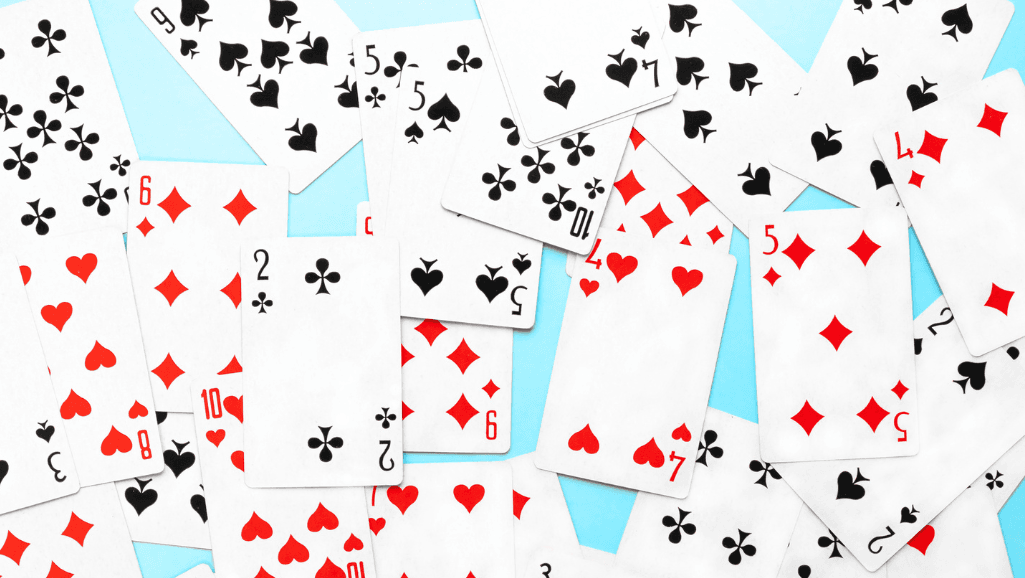
Big tactical leap: in the classic six-card layout, two identical ranks in the same vertical column erase that column’s points entirely. Sometimes keep a mediocre card if it completes a zero column—the trade can beat a risky swap.
Think in “holes” and practical moves that cut your score fast
One bad hand won’t ruin your course. Track totals and pick steady improvements each hole.
Fast, practical moves:
- Swap out any 10-point face card early.
- Protect a column that’s close to matching.
- Don’t take a discard that lets the next player complete a zero column.
Popular variations, knocking rules, and layout choices
Variations keep nights fresh: jokers, alternate match patterns, or scoring tweaks change risk and reward.
Knocking forces a finish: the knocker triggers final turns, which rewards good reads and penalizes reckless knocks if your group uses extra penalties or bonuses.
Layout quick compare: four-card (2×2) is fast and sharp; six-card (2×3) is classic balance; nine-card (3×3) favors deeper planning and often needs three-of-a-kind to zero a column.
For official house clarifications and extra tips, review the official rules and tips. If you plan a social night with drinks, pair scorekeeping with simple refreshments—see tips for a proper score-night.
Conclusion
Finish strong by focusing on the few moves that decide every round. Set up the grid, honor the discard rule, chase low values and column matches, and let end-of-round pressure sharpen your choices.
Pick the format that fits your night: 4-card for speed, 6-card for balance, or 9-card for deeper play. Agree on one scoring chart so everyone knows what’s fair.
If someone suggests solitaire or pyramid solitaire, remind them those are solo patience variants with different goals. Before serious scoring, print or save a one-page rules summary and run a single practice hole to lock in the draw/swap/discard flow.
Playing with an app? Take a moment to review the privacy policy and where the score button lives. Then relax — great cards, great company, and one low score to chase.
FAQ
What is this card pastime and what do I need to start?
How does multiplayer differ from solitaire play?
How many players, what deck size, and typical play time in the United States?
How do I set up the table with a stockpile and discard pile?
What’s the proper way to deal the grid and turn two cards face up?
How do I choose between the stockpile card and the discard pile card?
When can I swap a card and when is it forbidden?
When should I reveal a face-down card?
How does a round end?
What core rule should I remember about taking from the discard pile?
How are Aces, Twos, number cards, face cards, and Kings scored?
Why do matched ranks in a column matter?
How do I track score across nine or 18 rounds?
What practical moves cut score quickly?
What popular variations keep play fresh?
How do knocking rules affect end-round pressure?
How do four-card, six-card, and nine-card layouts change strategy?
Where can I find a privacy policy for digital versions of this pastime?
Are there multiplayer or online versions available?