


Garbage Card Game — a fast, family-friendly card game where small choices create big moments.
Garbage, also called Trash, has one clear objective: be the first player to line up a sequence from Ace through 10 across ten numbered positions.
Use one deck for two or three players, two decks for four or five, and three decks for six or more. Each player gets ten cards and arranges them face down in two rows of five. Each position maps to a number from Ace (1) through 10, making the layout easy for kids and adults to follow.
Kings are commonly wild and can stand in for a missing card; Jacks and Queens are often treated as trash and discarded under many house rules. After the opening turn, a player may take the top card from the discard pile when it fills a missing position on their layout.
Key Takeaways
- How to play Garbage Card Game: aim to fill positions Ace (1) through 10.
- Goal: complete the sequence quickly — read the board, claim matches, and chain flips.
- Decks scale with players for smooth sessions (1–3 decks depending on group size).
- Easy setup: each player receives ten cards in two rows of five.
- Great for kids learning number order and for quick family games.
- Wild kings and discardable face cards add strategy and choice.
- Use the discard pile strategically to recover missing spots and extend turns.
Quick example: draw a 5 — place it in spot five, flip the facedown card beneath, and keep chaining placements until you draw or reveal an unplayable card.
Ready to play? Gather your cards, map your positions left-to-right, and try a practice round to feel the flow.
Garbage (Trash) Card Game Basics: Objective, Players, and Why It’s Great
This simple matching card game asks each player to build a clear sequence from Ace through ten across ten labeled spots.
What the game is:
Sequencing the numbers
The core objective each round is simple and concrete: fill positions 1 (Ace) through 10 in sequential order. Each player places cards into ten fixed spots in front of them; completing the run makes that player the round leader and moves them closer to winning the match.
Who can join and what skills it builds
This game works especially well with two players but scales smoothly by adding another deck when more players join. It’s ideal for families — preschoolers who are learning order and older kids who enjoy quick, strategic turns.
Beyond being fun, Garbage highlights number placement rather than face-card play, so the visible layout and short turns help players practice number recognition and sequencing in a natural way.
- Quick rounds: fast player turns keep momentum high — a single chain of placements can end a player’s turn in seconds.
- Educational: the position-based layout mirrors simple counting tools (like a 10-frame), making it a gentle way to teach numbers and order.
Try this: play one demo round with a child — call out the target number for each position as cards are placed to reinforce learning while you play.
What You Need and How to Set Up
Match deck count to your group size to keep turns fast and the draw pile healthy.
Decks by player count and jokers:
- 1 deck for 2–3 players, 2 decks for 4–5, and 3 decks for 6 or more.
- Decide on jokers before you start — shuffle them in as wildcards or remove them for a numbers-only session.
Quick, numbered setup (easy to follow):
- Shuffle: Shuffle the chosen deck(s) thoroughly.
- Deal: The dealer gives each player exactly 10 cards face down.
- Layout: Each player arranges their ten cards in two rows of five (two rows), face down — these are your positions front-to-back and left-to-right.
- Map positions: Label the spots left-to-right as Ace (1) through 10 so every position corresponds to a number you can recall during play.
- Form piles: Place the remaining deck cards face down in the center as the draw pile and start the discard pile beside it with the first unplayable card.
Visual cheat-sheet (positions): 1 2 3 4 5 (top row), 6 7 8 9 10 (bottom row) — map them this way on the table so kids and new players can remember which spot is which.
“Clear setup equals smoother rounds — a neat layout helps everyone focus on numbers and strategy.”
Notes: When rewriting the page, improve the image alt text for accessibility if possible. If you include multiple decks, keep jokers and suits consistent across deck cards to avoid confusion in the draw and discard piles.
How to Play Garbage Card Game: Turn-by-Turn Rules
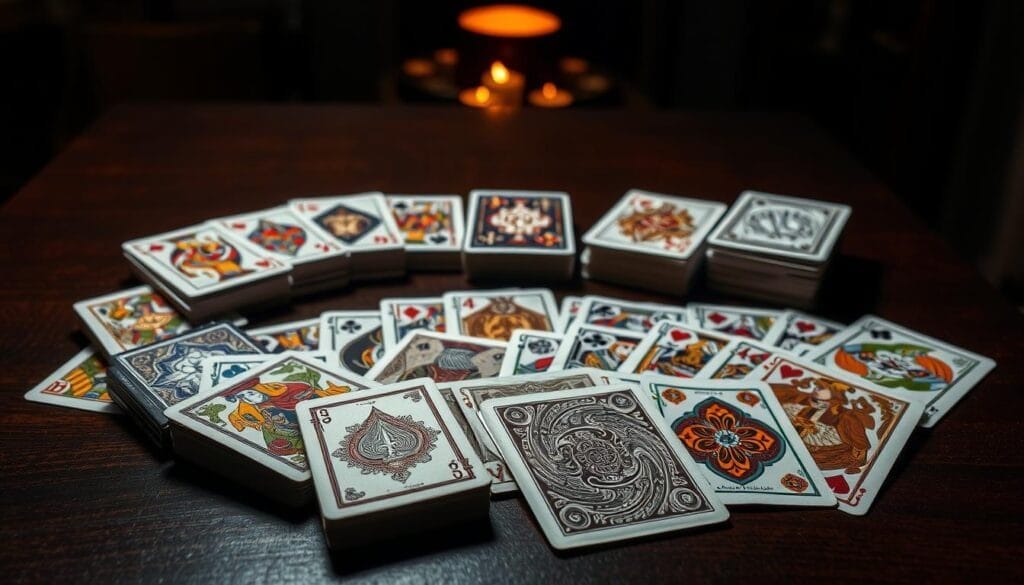
Start each turn by taking the top card from the draw pile and checking if it fits an open position on your board.
First turn:
First turn: draw the top card and place it in its spot
1. The player draws the top card from the draw pile. If it is a number (Ace through 10) and the corresponding position is empty, place that card into that numbered spot and immediately reveal (turn over) the facedown card that was there.
Flip-and-chain: moving revealed cards into open positions
2. When a revealed card matches another open position, place that card into its correct spot and reveal the next facedown card beneath it. This chain of placements can continue as long as each revealed card fits an empty position — long chains are how players quickly reduce unknowns on their boards.
Face cards and wildcards: jacks/queens as trash, kings as wild (common rule)
3. Face-card handling varies by house rules. A common setup is: Jacks and Queens are treated as trash and are discarded immediately, while Kings act as wildcards and may temporarily occupy any empty position until the actual numbered card appears. Agree on these roles before you begin to avoid disputes.
When your turn ends: discarding unplayable or duplicate cards
4. A turn ends when you draw or reveal an unplayable card. Define “unplayable” as either: (a) a numbered card whose position is already filled, or (b) a face card that your group treats as trash. Any such card must be placed face up on the discard pile, and play passes to the next player.
“Draw, place, flip — and keep the momentum going until an unplayable card brings your turn to a close.”
- Micro-tip: If you see a duplicate number during a chain, discard it immediately — holding duplicates rarely helps.
- Decision heuristic for face cards: Use kings early to fill a critical spot, but swap them out when the true number is revealed.
- Turn rhythm: A typical turn looks like: player draws → player places if possible → player reveals → repeat until unplayable → discard top card → next player.
Annotated example:
• Player draws a 5 (player draws the top card). They place it into spot five and flip the card beneath. The revealed card is a 10, so they place the 10 into spot ten and flip again. The next revealed card is a Jack (treated as trash), so they discard the Jack and their turn ends — that Jack goes to the discard pile for the next player to see.
Play garbage strategically: prioritize visible gains, avoid hoarding duplicates, and use wild kings as short-term helpers to maintain long placement chains.
Smart Decisions: Draw Pile vs. Discard Pile
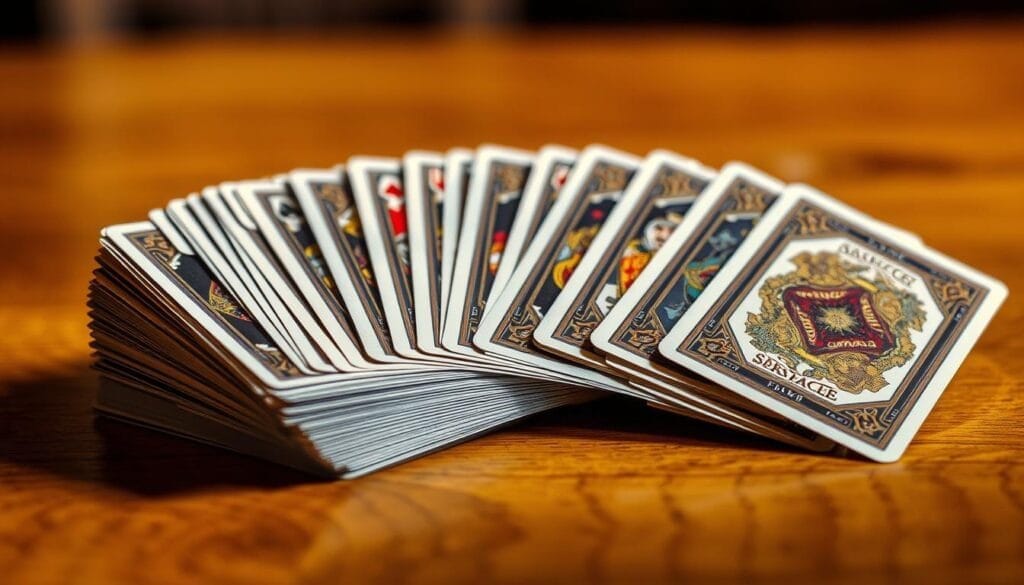
One small grab from the discard can turn a short turn into a long chain of placements.
After the first turn: choosing the top discard when it fills a missing spot
After the opening round passes, check the top card on the discard pile. If it exactly fills an open slot on your layout, take that top card and start placing — a known pickup often sparks a series of flips and placements that extend your turn far beyond a single draw.
Example plays that keep your chain going
If your 8 spot is empty and the top discard is an 8, grab it, place it, then flip the facedown card there. If that reveal is a 2, place it in spot two and flip again — one visible pickup can convert to a 3-card chain or more.
When the discard’s top card won’t help, draw from the draw pile instead. A blind draw still offers surprise value and can produce the exact card you need for a cascade of placements.
Quick decision checklist:
- If the top discard = a needed number, take it now.
- If not, draw from the draw pile and hope for a match.
- Claim the discard immediately when you take it — don’t hesitate, or another player may scoop it on their turn.
- Claim known gains: taking a visible number beats a blind card draw when your board is tight.
- Timing matters: if another player eyes the same number, prioritize the discard before it cycles away.
- Manage remaining cards: efficient placements lower uncertainty and boost your odds of a long turn.
Micro-tip: watch the discard pile every turn — a single top card in the middle of the table can be the way to win a round.
“Smart pickups deny opponents perfect grabs and quietly shape the flow of the round.”
Rounds, Scoring, and How a Player Wins
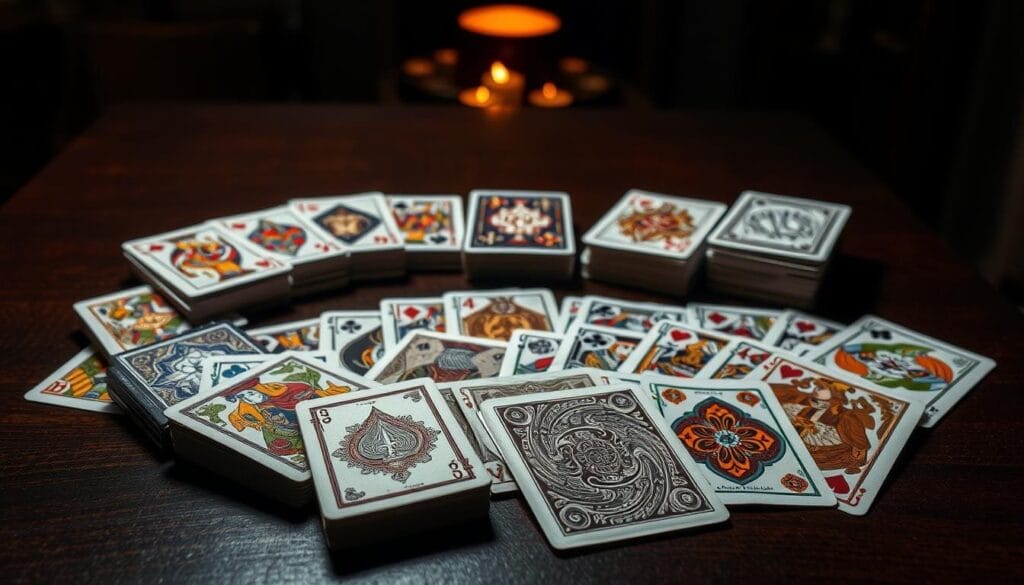
Each round ends the instant a player fills every slot from Ace through ten and calls it out.
Completing the full sequence
A round finishes when a player completes the Ace–10 sequence across their positions. When that player declares the run, every other person gets one final turn each — that extra chance can create ties or swing the next round’s leader.
Next round setup and progress
After a round, the winner reduces their layout by one spot (usually down to nine) while the other players remain at ten. Each subsequent round a winner trims their highest position by one: 10 → 9 → 8, etc. This progression rewards consistent winners and speeds the match toward the endgame.
Advancing until a final win
Play continues until a player has just one remaining position. When that person draws and places an Ace into that final spot, they claim the overall win. The cascading reduction of positions creates tense, fast-paced final rounds.
Managing the draw and stock
If the stock runs out during play, leave the current top discard face up, shuffle the rest of the discard pile (except that top card), and rebuild the draw pile so the round continues without interruption.
“Track previous round outcomes and the numbers that stalled you. Small adjustments make every round more strategic.”
- Core rule: fill Ace–10 to claim a round.
- Winner progression: the round winner plays one fewer card next round (fewer positions), which accelerates their path to the match win.
- Endgame thrill: the final Ace seals the overall victory for the first person to complete a one-card layout.
Quick example (3-round snapshot): Player A wins round 1 (drops to 9 positions). In round 2 Player A wins again (drops to 8) while others stay at 10. By round 4 Player A may be down to 6 positions — fewer cards means faster turns and higher variance, so keep a small scoreboard to track progress and settle ties visually.
Popular Variations, Wildcards, and Family-Friendly Tips

A few simple swaps in card roles can reshape strategy and speed for any group.
House rule swaps:
Face-card choices and wildcards
Choose one variant to keep play consistent. Example variants:
- Variant A — Kings wild (common): Kings act as wildcards (fill any missing position), while Jacks and Queens are sent to the discard pile. Effect: speeds placement and rewards opportunistic play. Recommended for: family groups and quick games.
- Variant B — Kings trash / Jacks wild: Make Kings automatic discards and let Jacks (or Jokers) serve as wildcards. Effect: slows rounds slightly and adds tension when wildcards appear. Recommended for: older kids and casual tournament nights.
- Variant C — Jokers as permanent wilds: Shuffle one or two Jokers into the deck as guaranteed wildcards. Effect: creates more rescue plays and longer chains. Recommended for: parties and mixed-age groups.
These simple swaps change tempo and tactics — pick one rule set before play and write it down so every person knows the deck rules.
Solo practice and gentle learning twists
To practice alone, deal yourself the layout and flip three cards at a time like solitaire, using only the top visible card from that mini-pile. This solo way sharpens sequencing and number recall while using the same core mechanics as multiplayer play. For families with younger kids, call out each spot as you place a card to reinforce number order and position recognition.
Shuffling, dealer choice, and smooth rounds
If the stock runs out during play, leave the top discard face up, shuffle the rest, and rebuild the draw pile so rounds continue without slowdowns. Choose the dealer and first player fairly — cut for high, draw the highest card, or let the non-dealer start — and rotate the dealer clockwise after each round to keep things fair.
“Use wildcards early to fill a critical spot, then swap them out when the true number appears.”
- Tip: Treat wildcards as temporary helpers, not permanent fixes; swap them when the true card shows up.
- Table care: tidy piles and clear rows make the game inviting for everyone and reduce disputes over positions and cards front.
Quick idea: pick one variant per game night — it’s the easiest way to keep play garbage fresh and make each session feel new.
Conclusion
Wrap up with confidence: remember that Garbage uses ten positions mapped Ace through 10 and each player begins with ten cards while the rest form the stock.
Fill the sequence, use the flip-and-chain mechanic when possible, and discard cards that don’t fit. Common house rules make kings wild and jacks or queens trash, but feel free to try a family variation to change the game’s pace.
The round ends when a player fills every spot and calls it out; that round’s winner drops a position for the next round. If the stock runs out, reshuffle the discard (leave the top card face up) and rebuild the draw pile so play continues smoothly.
Read the board, watch the discard pile, and be ready for a final ace to seal victory. Gather your players, cut the deck, and enjoy this brisk, educational card game.
FAQ
What is the objective of the Trash (Garbage) card challenge?
How many people can participate and what ages benefit most?
What supplies are needed and how many decks should I use?
How do I deal and arrange the initial layout?
How is the draw pile formed and where does the discard pile start?
What happens on the first turn when a drawn card fits a spot?
What is the flip-and-chain mechanic?
How are face cards and wildcards handled?
When does a turn end and what should be discarded?
When may I take from the discard pile instead of drawing from the stock?
Can you show an example of a chain that keeps a turn going?
How does scoring and winning a round work?
What is the next round setup after someone wins?
What popular variations should families try?
What happens if the draw pile runs out during play?
Who deals and who goes first in casual setups?
Are there time limits or pace tips for quicker sessions?