

phone controller

Phone Controller: Mobile Gaming Made Easy

The rise of mobile gaming has changed how we play games on our phones. But, touchscreen controls can sometimes get in the way, making games less fun. This is where phone controllers come in, making mobile gaming as good as console gaming.

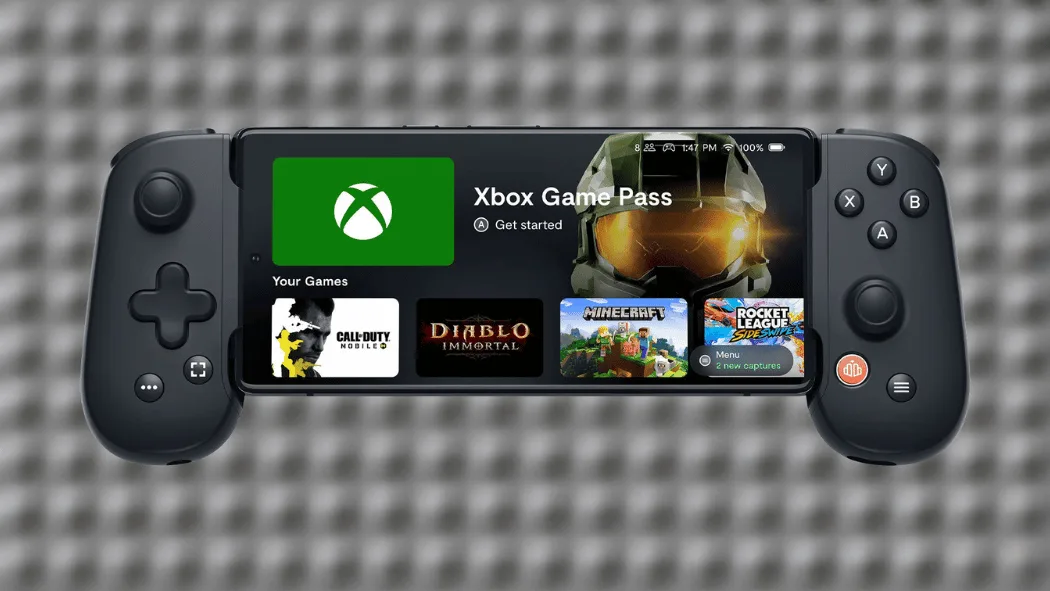
Phone controllers give you the feel of real gaming controllers. They let you play a wide range of mobile games better. You can choose from Bluetooth, wired, or clip-on controllers, fitting your phone and style. With a phone controller, you can dive into your favorite games like never before, right from your phone.

Key Takeaways

  • Phone controllers enhance the mobile gaming experience with improved precision and control.
  • Various phone controller options are available, including Bluetooth, wired, and clip-on models.
  • Popular phone controllers include the GameSir G8 Plus, Backbone One (2nd Generation), Razer Kishi V2, and Scuf Nomad.
  • Phone controllers are compatible with both Android and iOS devices, as well as cloud gaming services.
  • Using a phone controller can provide a more immersive and comfortable gaming experience on smartphones.

Introduction to Mobile Gaming Controllers

https://www.youtube.com/watch?v=FYXoIjNorJk

Mobile gaming has grown a lot, with the industry expanding over 32 times from 2009 to 2016. In 2016, the App Store had 540,540 games and 146,304 entertainment apps. Gamers are now using mobile gaming controllers to improve their experience and explore new possibilities.

These controllers, also known as smartphone gaming accessories, offer better control and comfort. They have physical buttons, triggers, and joysticks, just like traditional gaming consoles. By using a phone controller, you can dive deeper into games and compete better.

Research shows that mobile gaming controllers can really help with gameplay. A study with 81 participants found that direct touchscreen interaction works best for two-handed tasks. But, using a controller is better for one-handed tasks. This shows the benefits of controllers for different games and styles.

The need for mobile gaming controllers is clear. In 2012, nearly 50% of gamers chose mobile games over other platforms. A gamepad called iMpulse quickly reached its funding goal on Kickstarter. This shows how much people want these controllers. At least three major brands planned to release mobile gaming controllers in 2012.

As mobile gaming keeps growing, controllers are becoming key for serious gamers. Whether you’re playing top-rated mobile RPG games or competing in multiplayer, a controller can give you an edge. They offer better control, comfort, and immersion, changing how we play on smartphones and tablets.

Benefits of Using a Phone Controller for Mobile Gaming
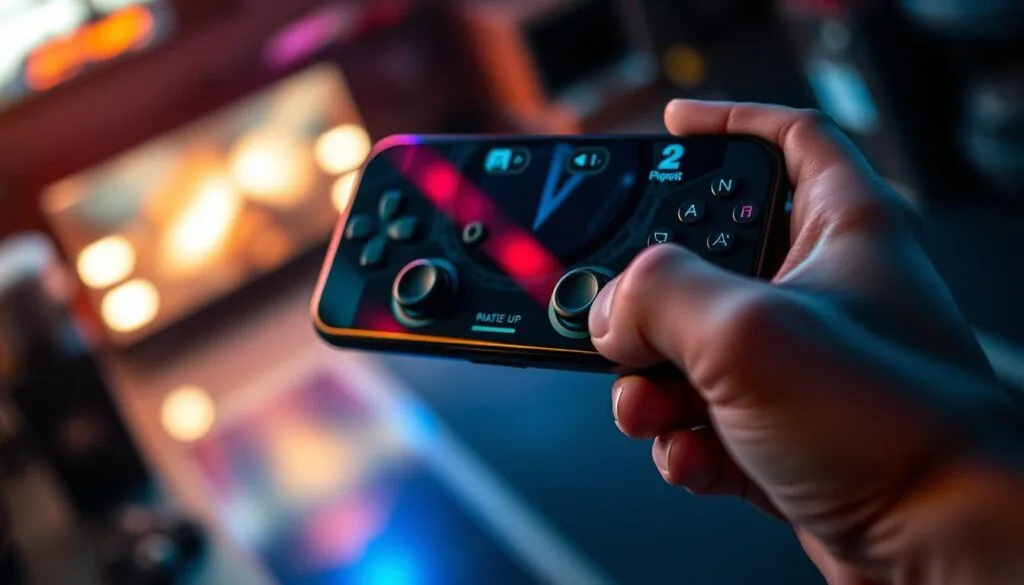
precision control with phone controller for mobile gaming

Using a phone controller for mobile gaming brings many benefits. It offers precise control, an ergonomic design, and immersive gameplay. This turns your mobile device into a powerful gaming machine.

Enhanced Precision and Control

One big advantage of a phone controller is its precise control. It has tactile buttons, analog sticks, and triggers. This makes your input more accurate than touchscreen controls.

This precision is key in fast games like first-person shooters and racing games. It’s crucial for quick reactions and precise aiming.

Improved Ergonomics and Comfort

Phone controllers are made for comfort. They have a design that fits well in your hand, reducing fatigue. This design also helps keep your hands and wrists relaxed.

This is great for long gaming sessions or games that need repetitive actions. With a phone controller, you can play longer without getting tired.

Increased Immersion and Gameplay Experience

A phone controller makes your gaming more immersive. It feels like a traditional gaming controller, giving you a console-like experience. The controls and feedback make you feel more connected to the game.

Whether you’re exploring worlds, playing multiplayer, or solving puzzles, a phone controller enhances your experience. It lets you dive fully into the game.

ControllerPriceCompatibilityKey Features
Backbone One$99.99Xbox, PlayStation, Steam, Apple Arcade, Xbox Game Pass UltimateMagnetic adapters for better phone fit, reshaped D-pad, integrated app for content organization
Razer Kishi Ultra$149iPhone 15, iPhone 15 Pro, USB-C iPad mini, USB-C Android phones and tabletsOffset analog sticks, circular 8-way D-pad, Razer Sensa HD Haptics, RGB lighting, passthrough USB-C charging

The table shows two popular phone controllers, Backbone One and Razer Kishi Ultra. It highlights their prices, compatibility, and main features. Both offer unique benefits, like Backbone One’s magnetic adapters and Razer Kishi Ultra’s haptic feedback.

Phone controllers bring a new level of excellence to mobile gaming. They offer precise control, comfort, and an immersive experience. Whether you’re casual or competitive, a phone controller can change your mobile gaming for the better.

Types of Phone Controllers Available
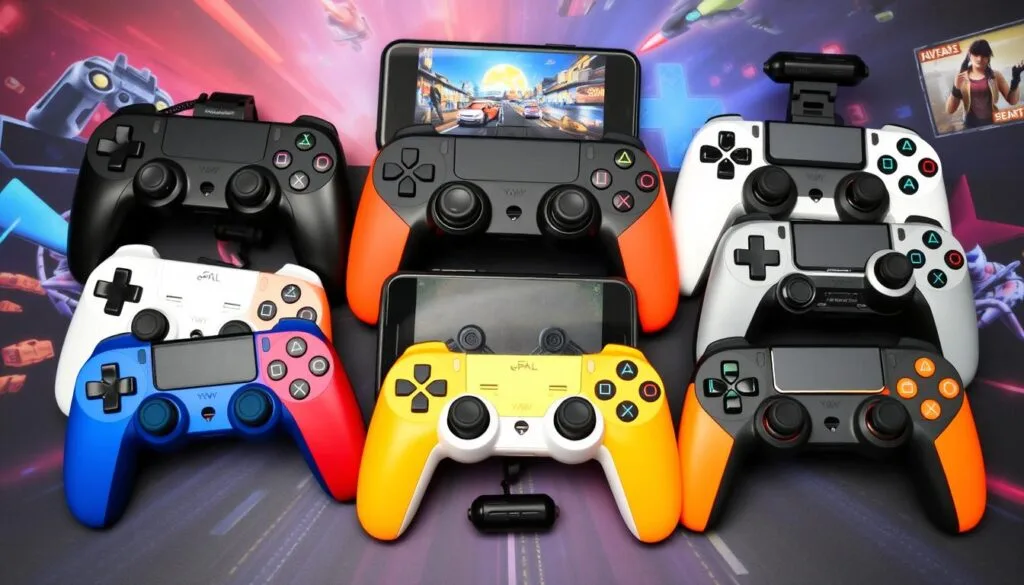
Types of phone controllers

Choosing the right phone controller is key to better mobile gaming. There are three main types: Bluetooth, wired, and clip-on controllers. Each has its own benefits and fits different needs and devices.

Bluetooth Controllers

Bluetooth controllers are loved for their wireless connection and wide smartphone compatibility. They connect via Bluetooth, offering a free gaming experience. You can move around without being tied to your phone. The Razer Kishi Ultra and GameSir T4 Cyclone are top picks, with features like haptic feedback and long battery life.

Wired Controllers

Wired controllers connect directly to your phone, ensuring a stable connection. They don’t need battery charging and offer a reliable gaming experience. The Riot PWR iOS Xbox Edition Cloud Gaming Controller is a great example, with pass-through charging and a direct Lightning cable for iOS devices.

ControllerPriceBattery LifeConnectivity
Turtle Beach Atom Controller$8020 hoursBluetooth
GameSir T4 Cyclone$40860 mAhBluetooth, 2.4 GHz, USB-C
Riot PWR iOS Xbox Edition$25N/A (Wired)Direct Lightning cable

Clip-on Controllers

Clip-on controllers turn your smartphone into a handheld console. They are compact and perfect for gaming on the go. They often have ergonomic grips, responsive buttons, and analog sticks. The Backbone One and Nacon MG-X Pro are top choices, offering a great gaming feel and game compatibility.

“The Backbone One is the best option if you’re on iOS. It will fit any iPhone newer than the 6S, including the latest iPhone 14 series. It has excellent build quality, analog sticks that click in, and the same button layout as an Xbox controller.” – The Verge

When picking a phone controller, think about device compatibility, controller connectivity, and the games you want to play. Whether you like Bluetooth’s freedom, wired’s stability, or clip-on’s portability, there’s a controller for you.

Top Phone Controller Options for Android and iOS

best phone controllers for mobile gaming

Choosing the right phone controller is key to better mobile gaming. There are many options for Android and iOS, making it hard to pick the best. We’ll look at top controllers that improve precision, ergonomics, and overall gaming feel.

GameSir G8 Plus

The GameSir G8 Plus is a top choice for its versatility and features. It has Hall effect sticks, swappable sticks, and face buttons for customization. It also works well with larger foldable devices, perfect for big screens.

Backbone One (2nd Generation)

The Backbone One (2nd Generation) offers a simple, plug-and-play setup. It has better buttons and a stronger design for a comfortable gaming session. It connects easily to your device, making it great for both Android and iOS users. Check out the Backbone One for a premium gaming experience.

Razer Kishi V2

The Razer Kishi V2 is a compact controller with a big impact. It has tactile buttons and a strong bridge for a stable gaming feel. It fits many smartphones and is easy to carry, perfect for gaming on the move.

ControllerKey Features
Backbone One (2023)Selected as the best overall mobile controller
GameSir G8 GalileoChosen as the best hardware controller
Razer Kishi V2 ProRated as the best for haptic feedback
Razer Kishi V2Features a stable, extendable bridge that securely holds all modern smartphone models

Scuf Nomad

The Scuf Nomad is made for iPhones, offering an ergonomic design and customizable controls. It gives you a console-like experience on your iPhone, thanks to its quality and layout.

When picking a phone controller, think about compatibility, ergonomics, and extra features. Whether you choose the GameSir G8 Plus, Backbone One, Razer Kishi V2, or Scuf Nomad, you’ll get a better gaming experience.

Setting Up and Connecting Your Phone Controller
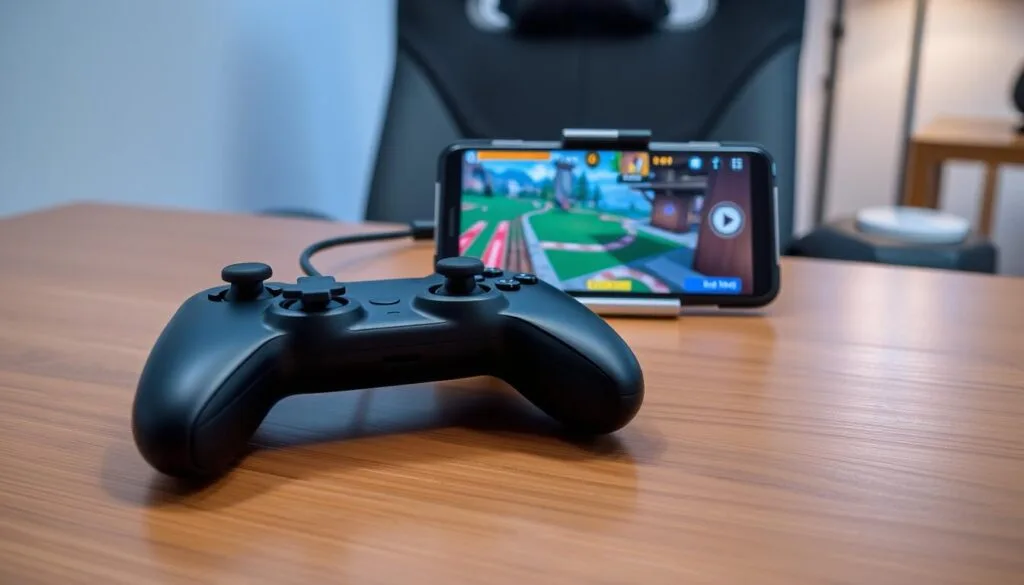
phone controller setup

Setting up your phone controller is easy, no matter the type. The steps for pairing and checking device compatibility might differ a bit. But the basic steps are the same for everyone.

For Bluetooth controllers, start by putting your controller in pairing mode. This is done by pressing and holding a specific button or a combination of buttons, as your manual will tell you. Then, go to your phone’s Bluetooth settings, look for devices, and pick your controller. It should connect to your phone automatically when it’s turned on and close enough.

Wired controllers are simpler to set up. Just plug the controller into your phone’s USB-C or Lightning port. Your phone will likely recognize it right away, letting you start playing games without any extra steps.

Clip-on controllers, like the Razer Kishi or Backbone One, have adjustable clamps. These are made to fit many phones securely. Always check the manufacturer’s list to make sure it fits your phone well.

Tip: Before buying a phone controller, check if it works with your phone and the games you want to play.

When setting up your controller, think about a few things for the best gaming experience:

  • Battery life and how to charge it
  • How comfortable it feels during long gaming sessions
  • Options for customizing it, like changing button settings or adjusting sensitivity
  • If it works with different mobile gaming platforms and services
DeviceCompatibility
iPhoneiOS 16 or later
iPadiPadOS 16 or later
Android smartphonesAndroid 10 or later (varies by model)

By following these tips and thinking about what you need, you can easily set up your phone controller. This will make your mobile gaming better, with more precision, comfort, and fun.

Compatible Games and Platforms for Phone Controllers

Phone controllers have changed mobile gaming. They offer a wide range of controller-compatible games on many mobile gaming platforms. Whether you use Android or iOS, you’ll find lots of games that support controllers. This makes your gaming more fun and immersive.

Android and Google Play Store

Android users have a huge choice of games on the Google Play Store. You can play fast action games like Call of Duty: Mobile or deep RPGs like Genshin Impact. Racing games like Asphalt 9: Legends and GRID Autosport also work great with controllers, giving you a console feel on your Android.

iOS and Apple App Store

iOS users have a lot of games to choose from on the App Store. Apple Arcade offers a special collection of games that work well with controllers. Games like Oceanhorn 2: Knights of the Lost Realm and Sayonara Wild Hearts are especially fun with a controller.

Cloud Gaming Services

Phone controllers also bring new options with cloud gaming services. Services like Xbox Cloud Gaming, GeForce Now, and Google Stadia let you play top games on your phone. With a controller, you get a gaming experience that’s almost like playing on a console. Here’s a look at some popular cloud gaming services:

Cloud Gaming ServiceCompatible ControllersSubscription Price
Xbox Cloud GamingXbox, PlayStation, and third-party controllersIncluded with Xbox Game Pass Ultimate ($14.99/month)
GeForce NowVarious controllers, including Xbox, PlayStation, and third-party optionsFree tier available, paid plans start at $9.99/month
Google StadiaStadia Controller, Xbox, PlayStation, and third-party controllersStadia Pro ($9.99/month), free tier with limited features

Most cloud gaming services support many controllers, but some need a subscription. Still, with a phone controller, you can turn your phone into a powerful gaming device. You can play a wide variety of games on different platforms.

Tips for Optimizing Your Mobile Gaming Setup with a Phone Controller

To enhance your mobile gaming, consider these tips for a better setup with a phone controller. Invest in the right accessories and tweak your phone settings. This will unlock your device’s full potential for smoother, more immersive gameplay.

First, upgrade your phone’s hardware. Chips like Qualcomm’s Snapdragon 8 Gen 2 or Apple’s A18 Bionic chip are great for smooth gameplay. Better GPUs mean smoother frames and less stutter. More RAM (8GB or higher) helps with multitasking and faster loading.

External fans can keep your phone cool during long gaming sessions. But, charging your phone while playing can make it hot and slow down performance.

Adjusting game settings can also improve your experience. Lowering game resolutions can increase frame rates without losing too much detail. Locking the frame rate to 30fps can make gameplay more stable. Lowering texture and shadow settings can also make games smoother.

Updating games, system software, and GPU drivers can optimize performance, fix bugs, and boost performance, especially on devices with newer Snapdragon chips.

Using your phone’s built-in features can also help. Game Mode or Performance Booster settings can give more resources to gaming. Clearing unused apps and files, and using an SD card can free up space. Background process management can also improve memory allocation for smoother gaming.

For better network connectivity, use Wi-Fi over mobile data. It has lower latency and is more stable for gaming. Switching to the 5GHz Wi-Fi band can also reduce ping and packet loss. A reliable Wi-Fi or 5G network can minimize lag and ensure stable performance.

Battery management is key for gaming. Keep your battery charged between 40-80% for best performance. Disabling battery saver modes helps keep CPU and GPU performance up. Calibrating your battery by fully draining and charging it helps with accurate power estimation.

Finally, investing in quality gaming accessories can elevate your mobile gaming. Bluetooth controllers like Razer Kishi or GameSir offer a console-like experience. Trigger buttons on phone edges can improve control in FPS games. Customizing your controller can tailor it to your preferences and playstyle.

Optimization TipBenefit
Upgrade smartphone hardware (CPU, GPU, RAM, storage)Smoother gameplay, faster loading times, better multitasking
Use external cooling fansMaintains optimal performance during intense gaming sessions
Adjust in-game settings (resolution, frame rate, textures, shadows)Improves frame rates and stability, balances visual quality with performance
Update games, system software, and GPU driversOptimizes performance, fixes bugs, boosts performance on newer devices
Utilize Game Mode or Performance Booster settingsAllocates more resources to gaming for improved performance
Manage storage (clear unused apps/files, use SD card)Frees up valuable storage space for games and updates
Optimize network connectivity (Wi-Fi, 5GHz band, reliable connection)Reduces latency, minimizes lag, provides stable performance environment
Manage battery (keep charged between 40-80%, disable battery saver modes)Ensures peak performance during gaming, maintains CPU and GPU performance
Invest in gaming accessories (controllers, trigger buttons, customization options)Enhances control, precision, and immersion, tailors setup to preferences and playstyle

By following these tips and optimizing your mobile gaming setup, you’ll enjoy an unparalleled gaming experience on your phone.

Conclusion

The world of mobile gaming innovation has changed how we play games on our phones. Phone controllers, key smartphone gaming accessories, have made gaming better. They offer precision, comfort, and a deeper dive into the game world.

There’s a controller for every gamer out there. From Bluetooth and wired options to clip-on designs, the choices are endless. This means everyone can find a controller that fits their style and needs.

The future of gaming looks bright, and so does the demand for top-notch phone controllers. Game makers are creating more complex games for mobiles. This means we need controllers that offer precise and comfy control.

By choosing a reliable controller, like the GameSir G8 Plus, Backbone One (2nd Generation), Razer Kishi V2, or Scuf Nomad, gamers can take their experience to the next level.

Phone controllers work well with many platforms, including Android, iOS, and cloud gaming. This lets gamers play a wide range of games with better control. As mobile gaming grows, so does the role of phone controllers in shaping its future.

By using these innovative accessories, we can look forward to a more immersive and fun mobile gaming world. It’s going to be competitive and exciting for years to come.

FAQ

What is a phone controller, and how does it enhance the mobile gaming experience?

A phone controller is a gaming accessory for your smartphone. It has physical buttons, triggers, and joysticks. This makes gaming more intuitive and comfortable.It improves precision and ergonomics. This leads to a better gaming experience, making it easier to enjoy and compete in mobile games.

What are the different types of phone controllers available?

There are three main types of phone controllers. Bluetooth controllers connect wirelessly. Wired controllers plug directly into your device. Clip-on controllers attach to your smartphone, making it feel like a handheld console.

What are some of the top phone controller options for Android and iOS devices?

Top options include the GameSir G8 Plus, Backbone One (2nd Generation), Razer Kishi V2, and Scuf Nomad. Each offers unique features for both Android and iOS devices.

How do I set up and connect my phone controller?

Setting up your phone controller is easy. For Bluetooth controllers, just put it in pairing mode and search for it on your phone. Wired controllers plug into your phone’s port. Clip-on controllers have adjustable clamps for a secure hold.

What games and platforms are compatible with phone controllers?

Phone controllers work with many games and platforms. Android devices can use games from the Google Play Store. iOS users find compatible games on the App Store, including Apple Arcade.They also work with cloud gaming services like Xbox Cloud Gaming, GeForce Now, and Google Stadia.

How can I optimize my mobile gaming setup with a phone controller?

To enhance your gaming setup, consider accessories like controller grips and cases. Portable chargers and gaming headsets are also great. Some controllers offer customization options, like swappable thumbsticks or programmable buttons.

Are phone controllers the future of mobile gaming?

As mobile gaming grows, so will the demand for phone controllers. They’ve changed the mobile gaming experience. Now, users can enjoy games more immersively, comfortably, and precisely on the go.
Coop Games for Couples
Best Coop Games for Couples to Play Together
Coop Games for Couples: Turn a night in into a shared adventure Ready to turn a night in into a shared adventure? This guide highlights cooperative game picks that make teamwork feel natural and joyful, whether you’re on the same couch or playing across states. From split-screen dramas like A Way Out to cozy sandboxes such as Minecraft and Stardew Valley, you’ll find options that fit any mood, time frame, and skill level. We cover story-rich journeys, communication-first puzzles, chill building worlds, loot-filled action, and spine-tingling horror. Picks like Phasmophobia and Borderlands 2 show how cooperative play can spark laughter, strategy, and memorable moments that grow your relationship and game library together. Accessibility and practicality matter: many titles support local split-screen or local online play; others use phone controllers or companion apps (for example, Jackbox Games) or run in browsers and mobile so friends and partners can join with minimal setup. Note: cross-play and split-screen vary by title and platform—check the store page before you buy. Expect quick party rounds, focused chaptered sessions, and long-form RPG nights you can return to over months. This article groups recommendations by vibe and playstyle and gives clear mode and partner tips so you can pick a perfect match and press Start tonight. Key TakeawaysCoop Games for Couples — a curated list to spark shared play and inside jokes. Find cooperative picks that create small wins and strengthen bonds through teamwork. Choices span story, puzzle, cozy, action, and horror styles to match any evening. Many titles offer local split-screen or online multiplayer so distance is just a bit of geography. Recommendations favor communication, forgiving difficulty, and replay value so both players stay engaged. Each entry includes mode notes, platform caveats, and partner tips to help you jump in fast.What Makes a Great Co-Op Date Night GameA great date-night game balances ease, shared objectives, and moments that spark conversation. Look for cooperative titles with clear joint goals, forgiving learning curves, and mechanics that reward communication and working together. Practical session design matters: keep games chaptered or mission-based so you can finish cleanly when time is tight. Story-driven picks like A Way Out and Until Dawn provide natural stopping points, while roguelikes and short-mission action games fit 30–60 minute windows. Easy play reduces friction—prioritize intuitive controls, adjustable difficulty, and modular content so new players feel welcome. Puzzle co-op picks such as Portal 2 and Escape Room-style games reward patient teamwork and conversation without demanding twitch reflexes.Local vs remote flexibility: pick games with split-screen or simple online invites so you can switch between couch co-op and distance play. Collaborative loops: focus on mechanics that make players work together (shared objectives, complementary roles) rather than compete. Conversation prompts: choose titles that trigger small decisions and banter—these make the experience into a bonding memory.Quick tech checklist before you press Start: confirm split-screen support, controller count, cross-save or cloud sync, and server stability. Replay value—branching paths, procedural puzzles, or robust multiplayer—keeps date nights fresh. Check these tech points before launching tonight and pick a session length that fits your time. Story-Driven Adventures You’ll Remember Together Cinematic teamwork and shared choices make narrative co-op a powerful way to connect. A Way Out — purpose-built two-player split-screen built on coordination A Way Out is designed specifically for two players, with split-screen scenes that demand timing and cooperation. The game forces role-sharing—one partner creates distractions while the other times actions—so you literally learn to work together scene by scene. That shared focus turns small wins into memorable moments. Play locally on the couch or online with headsets. Chapters are short and cinematic, so you can plan 45–90 minute sessions. Tip for couples: start on the default difficulty and agree on a pause signal for intense scenes so you can debrief or take a breather. Borderlands 2 — quest-rich co-op shooter with humor and heart Borderlands 2 mixes irreverent writing and character moments with a giant quest log and addictive loot chase. The game rewards complementary roles—one player can focus on survivability while the other chases damage—so both stay active and engaged during long sessions.Role tip: pick builds that cover each other (e.g., tanky frontline + high DPS) to reduce wipe risk and keep both players involved. Play note: class synergy shines—try creative loadouts and trade gear when you find useful items for your partner. Platforms: Borderlands 2 has legacy roots (Xbox 360) but is available on modern platforms like PC and consoles—check current storefronts or subscription services (Game Pass availability varies by region and time).Story-forward co-op amplifies empathy: tough choices and cutscenes land harder when you decide them together. Savor the banter, and set a small ritual to talk about favorite moments after each session—those conversations are often the best part of the experience. Puzzle & Communication Tests for Partners Who Love Solving Together If you and your partner enjoy thinking together, communication-first puzzle games turn problem solving into an act of connection. These co-op puzzles reward clear speech, patient steps, and the small thrill when a solution clicks—perfect for a focused 45–90 minute session. Escape Room Simulator — remote-friendly logic without burnout Escape Room Simulator is a good pick for long-distance couples. Its rooms invite role splits—one player hunts clues while the other decodes and validates answers—so both people stay active. Sessions are modular, which makes it easy to stop and return without losing momentum. Quick setup tips: run voice chat (Discord or Zoom), share a camera view or screen when stuck, and use a shared Google Doc or the game’s chat for notes. Aim for a single room per night to keep frustration low. Portal 2 Co-Op — teamwork over twitch reflexes Portal 2 emphasizes sequencing and timing: you coordinate portal placement, ping important elements, and chain steps together. Start with the official co-op campaign to learn the rhythms, then try community maps from the Steam Workshop for fresh puzzle design.Use clear voice chat and a shared notepad—drawing or writing simple steps reduces confusion. Practice “teach, don’t tell”: ask guiding questions so both players stay mentally engaged. Alternate short rooms and longer chains to manage fatigue—try one 30–45 minute puzzle or a 60–90 minute combo depending on mood.Why it works: Puzzle co-op builds listening skills and collaborative problem-solving you can reuse in other games and in life. Ritual idea: alternate a Portal night with an Escape Room session once every other week to keep things fresh and celebratory. Cozy & Chill Worlds to Build, Farm, and FishWhen the goal is calm connection, cozy co-op games make it easy to unwind and create gentle rituals together. Stardew Valley — cultivate a shared farm and even marry in-game Stardew Valley sets a relaxed tempo: plant, tend, mine, and chat between tasks. In co-op, partners can build a homestead together, split chores, and even marry each other in the same save on supported platforms. Quick setup note: the host opens a co-op farm and friends join via the in-game invite or by joining the host’s server; on consoles this can differ slightly, so check the platform’s join flow. Session idea: 60-minute “farm night” — plant crops, fix one building, then take 10 minutes to tour and screenshot your progress. Minecraft — low-pressure sandbox with endless projects for two Minecraft is a blank canvas for two players to design cabins, farms, and entire towns at your own pace. Use Realms or a private server for persistent worlds you can return to, or host locally for split-screen play depending on your console. Try alternating sessions: one night dedicate 45–90 minutes to building, the next go on a short exploration run to discover a new biome. This keeps both people engaged and gives space for personal goals alongside shared ones. Comfy fishing and life-sim picks — relaxing sessions perfect for winding down Curators and communities praise “comfy” life sims for easygoing co-op: sit by a lake, fish, cook, or tend a garden and use those quiet moments to talk or share playlists. These experiences scale from half-hour wind-downs to multi-hour creative sessions.Make memories: use in-game photo spots or record short tour clips to capture favorite corners of your world. Scale sessions: play 30–60 minutes after dinner for a quick check-in, or block a few hours on weekends for bigger projects. Gentle challenges: set small, shared goals—finish the greenhouse, reach a new biome, or catch a seasonal fish—and celebrate when you hit them.Why it matters: cozy co-op creates low-pressure shared experiences that build the habit of showing up for each other. Try a simple goal for your next session—finish one small project together and call it a win. Those tiny shared victories add up to hours of calm, creative togetherness you’ll return to again and again. Action, Loot, and Hack-and-Slash Fun for TwoIf you want high-energy nights full of loot, boss fights, and steady progression, action-heavy co-op games deliver nonstop momentum. Diablo 4 — class synergy and a sprawling campaign to grind together Diablo 4 is built around complementary classes and gear-driven progression. Try a frontline Barbarian to soak damage while a Sorcerer or Rogue handles ranged and burst damage; or pair Rogue burst with a Necromancer for summoned support. These role combos keep both players engaged across long sessions. Play tips: start on standard difficulty, plan short session goals (one dungeon or campaign chapter), and split loot decisions so neither player falls behind in gear. If you record clips, ask permission before sharing highlights online—respect each other’s privacy. Monster Hunter Rise — hunt, craft, and progress with multiplayer-friendly design Monster Hunter Rise focuses on a tight hunt loop: prepare, track, fight, carve, and craft. For couples, a good rule is “one hunt per night” — queue up, coordinate consumables and roles (damage vs. support), then enjoy the crafting payoff together. Communication about positioning and consumable timing makes hunts much smoother. Platform note: console duos on Xbox One, Xbox Series, and PC should pick the version that matches their friend list and saves; cross-play varies—check the storefront before you plan a session. Risk of Rain 2-style roguelike runs — chaotic, replayable nights Roguelike co-op delivers short, explosive runs with huge variety. Each run is different, so these games are perfect when you only have an hour but still want big moments and surprising combos. How to approach: keep early runs casual and low-difficulty, then push challenge runs as you both get comfortable. Use short-session pacing—set a run limit (one or two) and capture first clears or epic loot drops for a highlight reel. Communication—call-outs, positioning, and item use—matters more here than raw twitch skill.Play pacing: aim for one hunt, dungeon, or run per session when time is limited. Communication: call-outs for boss phases, positioning, and consumable use reduce wipes and keep momentum. Replay value: loot loops, procedural encounters, and build variety mean you’ll find new combinations for many hours.Scary-but-Fun Horror NightsA well-paced fright night balances story tension, tactical teamwork, and plenty of post-scare laughs. Pick a vibe—slow-burn narrative, tense investigation, or full-throttle chaos—and match difficulty to your comfort level so the night stays fun for both of you. Phasmophobia — ghost-hunting teamwork Phasmophobia is a teamwork-first horror sandbox where role splits shine: one player reads evidence, another handles gear, and a caller maintains radio chatter. Sessions are typically 30–60 minutes depending on map size and objectives. Safety tip: agree on an opt-out signal (a word or a raised hand) and set volume limits if one partner is sensitive to jump scares. Use voice chat with clear mic settings to keep immersion without confusion. Left 4 Dead — frantic rush against hordes Left 4 Dead delivers classic, frantic co-op against swarms. Focus on managing special infected, watching flanks, and staying close when hordes surge. Expect 20–45 minute campaigns or curated scenarios depending on the map. Tip: explore curated Workshop campaigns on PC after you master the basics to extend replay value. Note legacy roots (including Xbox 360-era ports), but current community content often lives on PC. Until Dawn — pass-the-controller thriller Until Dawn works great as a pass-the-controller movie night: one player holds the controller while both discuss and choose together. Sessions are chapter-based and ideal for 60–90 minute movie-style evenings. Create duo rules like trading chapters at cliffhangers or pausing after tense decisions to debrief—these small rituals keep both partners invested and turn scares into inside jokes.Scare comfort ladder: start with story-heavy, low-tension picks (Until Dawn), try investigative teamwork next (Phasmophobia), then attempt full-chaos cooperative shooters (Left 4 Dead) when you’re warmed up. Debrief: after intense moments, share the funniest or most surprising beat to diffuse tension and build shared stories. Session tips: set a clear timebox (30–90 minutes), agree on difficulty, and have a non-game wind-down ready—snacks, a comforting show, or a walk—to ensure you both end the night smiling.coop games for couples You Can Play Long-Distance Right NowLong-distance nights can feel close again with simple, low-friction online options that run on phones, browsers, or lightweight apps. These picks use everyday devices so you can reconnect without awkward setup or technical stress. Jackbox Games — press start and laugh (best for quick party laughs) Jackbox bundles 30+ party titles into short rounds that use phones as controllers. Setup in one sentence: host opens a party on PC/console, share the room code over video call, and everyone joins via a browser on their phone. Great for 20–45 minute sampler nights of Drawful 2, Quiplash, or Fibbage. VRChat — feel present, no headset required (best for hanging out) VRChat creates persistent social spaces with avatars, mini-games, and shared watch parties. You can join on PC without a VR headset, making it an easy option for casual, presence-driven hangouts. One-sentence setup: install the client, create an account, and drop into the same world using an invite link. Settlers of Catan Online & Exploding Kittens (best for light strategy or silliness) Settlers of Catan online provides satisfying strategy nights on PC and mobile where trades spark conversation. Exploding Kittens is perfect for fast, silly rounds that fit any schedule. Both require only a device and an invitation link—ideal when you want a short competitive spark. Deck of Cards, Facebook & Snapchat (best for ultra-short sessions) Classic card decks and social app mini-games run easily over video calls. Use Facebook or Snapchat for quick mini-activities when you have 10–20 minutes between meetings or during a coffee break.Simple flow: hop on a 30–45 minute call, pick one quick game, then extend if you both want—perfect for busy couples. Sampler night: rotate two or three short picks (Jackbox + Exploding Kittens + a card game) to find favorites without committing to long sessions. Rotate host duties: let one partner pick the game each week to keep things fresh and surprising.Accessibility & age notes: check content settings (Jackbox has family-friendly packs) and confirm device requirements ahead of time so both partners can join quickly. Low friction = higher chance you’ll play often, which is the point: use these easy options to keep your relationship playful across distance. Epic RPG Adventures to Share Over Time Epic roleplaying titles invite steady progress, deep dialogue, and co-authored memories. These campaigns reward consistent play and make shared choices feel meaningful across hours, seasons, or even years—perfect when you want a shared world to return to together. Divinity: Original Sin 2 pairs layered narrative with turn-based tactics. Play together in a party (up to four), coordinate positioning and creative combos, and watch how decisions ripple through the world. Each encounter becomes a conversation about what kind of heroes you want to be. Divinity: Original Sin 2 — rich story, turn-based tactics, and choices that matter Original Sin 2 offers deep tactical play and branching story beats that spark discussion. Suggested roles: one player handles frontline control (tank/guardian) while the other focuses on ranged or elemental combos (mage/archer). Recommended cadence: 1–2 weekly sessions of 2–3 hours or shorter 60–90 minute blocks to keep momentum without burnout. Baldur’s Gate 3 — cinematic co-op epic with endless roleplay possibilities Baldur’s Gate 3 raises the bar for cinematic co-op RPGs: rich performances, branching paths, and reactive worlds make duo roleplay feel dramatic. Role templates: face (charismatic dialogue lead), scout (stealth/exploration), controller (crowd control spells), striker (damage dealer). To avoid momentum loss, set small milestones—clear a dungeon, finish a companion quest, or reach a level threshold—so each session has a tangible win. Final Fantasy XIV — story to endgame content fully playable together Final Fantasy XIV supports cooperative progression from main story to endgame raids. Level sync smooths gaps so partners can team up even if their playtimes differ. Note: FFXIV requires a base purchase and a subscription for full endgame access—factor that into your planning. Try carving a weekly raid or story night and align character backstories to make the campaign feel like a shared project.“Long-form RPGs become touchstones—worlds you’ll return to together for hours and many months.”Session tips: pick a regular cadence (weekly or biweekly) and keep sessions consistent—small, repeatable habits beat sporadic bingeing. Roles & coordination: agree on complementary roles early to avoid stepping on each other and to maximize each player’s fun. Platform note: these titles are available across PC and consoles (including Xbox One/Series where applicable); check platform-specific co-op details and purchase/subscription requirements before you commit.Drop-In Drop-Out and Couch Co-Op Classics Short, punchy couch sessions can turn a spare half-hour into a riotous shared memory. These drop-in/drop-out picks work when you have a little time and big intent: snack-ready, low-fuss, and made to start fast. Castle Crashers — fast-paced beat ’em up perfect for short sessions Castle Crashers is immediate: pick a character, mash attacks, and laugh at the chaotic screen. How to play in 30 minutes: 5 minutes—choose characters and load a level; 20 minutes—run one stage and try to beat the mini-boss; 5 minutes—compare loot and pick a next quick run. Controller note: supports local 4-player drop-in on most modern ports—check the platform for exact controller limits. Moon Hunters — procedural runs with choices and myth-making Moon Hunters plays like a breezy roguelite where each run adds to a shared legend. Session micro-plan: 5–10 minutes to pick roles and buffs, 20–30 minutes for a run, and 5–10 minutes to record a quick story blurb about what happened. The procedural design rewards experimentation and gives real meaning to short sessions.Quick answer: these couch gems solve “we have 30 minutes—what now?” with instant fun and easy rules. Keep it light: set a run/stage limit, pair with snacks or a short playlist (lo-fi or energetic chiptune), and rotate characters to explore partner synergy. Simple to teach: both titles are easy to explain to visiting friends and accessible for one new player joining a session.Use them as a warm-up or a nightcap. The simplicity doesn’t mean shallow—Moon Hunters’ narrative choices and Castle Crashers’ progression add texture over many hours. Alternatives if you don’t own these: modern co-op picks like Overcooked! 2 for chaotic local teamwork or Streets of Rage 4 for classic beat ’em up action. Try a short set, then move to a longer title or repeat for instant shared joy. local multiplayer picks Quick Picks by Platform and Play Style Match energy to platform. Some nights call for slow, cozy sessions; others need fast, chaotic runs. Decide whether you want local split-screen, online co-op, or quick drop-in play and pick a go-to that fits your mood. Local or online co-op and split-screen options Best pick for quick nights: split-screen and local online titles like A Way Out (cinematic teamwork), Stardew Valley (low-key farming), and Minecraft (freeform building) let two players jump in without long setups. Xbox One/Series and PC favorites for easy play Xbox One and Xbox Series owners can often try games through subscription services like Game Pass—great for sampling. For steady co-op, try Monster Hunter Rise (progression-friendly), Diablo 4 (flexible builds), or Final Fantasy XIV (level-sync lets uneven schedules work together). Note: FFXIV requires a subscription for endgame content; check storefronts for current availability. 4-player co-op titles that still shine with just one couple Best 4-player co-op options: Risk of Rain 2 delivers chaotic runs, Left 4 Dead offers classic teamwork, and Borderlands 2 keeps quests fun with two players—these titles scale well and remain satisfying for a pair.Before you play (compact checklist): check cross-play and platform compatibility, update the game, pair controllers, and confirm save/cross-save behavior. Platform perks: level sync in Final Fantasy XIV; robust Workshop content on PC for Portal 2 and Left 4 Dead adds replay value and community maps. Extras: VRChat is a lightweight hangout option that can feel like a night out without special hardware. Tip: pick one default “go-to” per platform (quick nights) and keep a rotating bench of 2–3 other titles for variety—this simplifies decision-making and increases the chance you’ll play together regularly.Conclusion Start small: pick one title from this list, set a simple goal for your next date night, and press Start. A short, successful session builds momentum far better than an overambitious marathon that never happens. Rotate story, puzzle, cozy, action, and horror picks to keep things fresh. Choose a short session (30–60 minutes) when time is tight, and save longer co-op campaigns or raid nights (2–3 hours) for weekends. This mix helps you maintain a habit of playing together across busy weeks and long stretches of life. Co-op games help partners work together, communicate more clearly, and create a shared world of inside jokes and victories. Use online games to bridge distance, and treat play as low-pressure time that strengthens your relationship a bit each session. Keep a quick “go-to” list, schedule a regular night, and try one new title a month. Your next favorite co-op moment is one click away—make play a repeatable ritual and enjoy the shared memories you build together.FAQWhat should we look for when choosing a two-player cooperative title for date night? Match the game to your mood and skills. Story-led RPGs like Divinity: Original Sin 2 or Baldur’s Gate 3 suit couples who enjoy deep narrative and roleplay; puzzle-focused picks such as Portal 2 or escape-room simulators favor partners who like communication and brainteasers. For low-pressure evenings, try sandbox options like Stardew Valley or Minecraft. Also check platform support (local split-screen, online co-op, or drop-in/drop-out), controller requirements, and approximate session length so you can plan around work, family, or timezones. How do we avoid frustration when playing puzzle or teamwork-heavy titles? Set expectations before you start: pick challenge or casual mode, agree on a difficulty, and use voice or chat so both players can share clues. Take short breaks if tension rises and switch to a cozy or action title (for example, Stardew Valley or Monster Hunter Rise) if you need to reset. Patience and simple communication turn tricky moments into bonding opportunities. Can we enjoy meaningful co-play if we’re long-distance? Yes. Low-friction options like Jackbox and Exploding Kittens offer light social matches; Settlers of Catan online and Final Fantasy XIV provide deeper shared sessions. Pair gameplay with voice or video for extra presence—streaming a build session in Minecraft or co-oping in Stardew Valley while on a call keeps the experience emotionally close. Are there titles specifically built for two players? Yes. Some games prioritize two-player interaction—like A Way Out, which centers on split-screen coordination and shared escapes, or Portal 2’s dedicated co-op campaign. When browsing stores, look for tags such as “two-player,” “co-op,” or “split-screen” to find experiences crafted around duos. What platforms are best for couples who want simple pick-up-and-play sessions? Consoles like Xbox One/Series and Nintendo Switch excel at local couch co-op with easy controller sharing. PC offers broad online features, mods, and community maps. Mobile and browser-based apps are ideal for ultra-short sessions when you only have a few minutes. Prioritize platforms and titles that advertise local multiplayer and clear controller support for the smoothest pick-up-and-play experience. How can we keep sessions fresh over months or years together? Rotate genres and set small milestones—complete a dungeon, finish a farm season, or reach a raid boss. Try community maps and mods (Portal 2, Left 4 Dead) or download DLC (for games such as Diablo 4) to expand your world. Consistent scheduling (even short weekly sessions) and shared goals keep the campaign feeling like a living project you both contribute to over many hours and months. Are party-style or four-player titles still fun with just two people? Absolutely. Many 4-player games scale well for two: Borderlands 2, Left 4 Dead, and Castle Crashers remain engaging with a duo by focusing on class synergy or coordinated positioning. You can also invite friends to drop in occasionally to change the dynamic without losing the couple experience. What if one partner prefers relaxed, low-stress play and the other likes challenge? Compromise by alternating session types: a calming sandbox one night and a challenging puzzle or action title the next. Choose games with adjustable difficulty or shared goals—Stardew Valley for chill sessions and Monster Hunter Rise for coordinated hunts. Communicate preferences and alternate who picks the game to keep things fair and fun. How do we set up a smooth co-play session technically? Before you play: check cross-play and platform compatibility, update the game, pair controllers, and confirm save/cross-save behavior. Test voice chat and mic levels, ensure chargers and a stable internet connection are handy, and have a quick backup plan (a short local co-op title or a party app) if servers go down. Which multiplayer titles give the best narrative moments couples can talk about later? Story-driven RPGs and cinematic adventures deliver memorable scenes you’ll replay in conversation—Divinity: Original Sin 2 and Baldur’s Gate 3 are full of branching choices and roleplay opportunities. Final Fantasy XIV unfolds a long-term saga you can experience together, while choice-driven movie nights in Until Dawn spark lively post-game debates....
Best Android Games Without Ads
Best Android Games Without Ads: Top Picks
Ready for distraction-free play? This guide points you to clean-screen play on Google Play and beyond,...
Mobile Strategy Games
Top Mobile Strategy Games for On-the-Go Play
Start your next commute or coffee break with confidence. Find the best mobile strategy games that deliver...
Top Grossing Mobile Games
Top Grossing Mobile Games: Revenue Leaders
Welcome to a concise guide that turns billion-dollar revenue lists into playable picks. The industry...
spy game review
Spy Game Review: Expert Analysis and Insights
This concise review gives you expert insight into why Tony Scott’s 2001 film still captivates. Expect...
Forhad Khan
Forhad Khan
Articles: 235

Newsletter Updates

Enter your email address below and subscribe to our newsletter

Leave a Reply

Your email address will not be published. Required fields are marked *