

Stepping into interactive play should feel welcoming and fun. This short guide highlights gentle, well-designed picks that teach controls and reward curiosity.
Today’s options span PS5, Xbox Series X|S, Nintendo Switch, PC, tablets, and phones. New players often stumble on hidden rules like trigger sensitivity in racers or cluttered HUDs.
We spotlight titles praised for clear feedback, forgiving pacing, and friendly communities. Expect cozy sims, puzzle adventures, and party-style picks that suit many tastes and schedules.
Each suggestion explains why it works for beginners, what to expect in playtime, and which console or system fits best. You’ll also find notes on solo vs. social play and where to find community support.
Follow this path and you’ll build core skills—navigation, timing, pattern recognition—while having a great time. If you want a curated list tied to hardware and player style, visit this guide.
Key Takeaways
- Games for New Gamers.
- Choose titles with clear prompts and forgiving checkpoints.
- Try cozy sims or puzzle adventures to learn at your own pace.
- Match picks to your console or system for smooth setup.
- Look for active communities and guides to speed learning.
- Play social or solo modes to build confidence and skills.
Start here: how to pick beginner-friendly games that fit your play style
Choose a title that teaches while it entertains. Look for clear prompts, adjustable assists, and short sessions that respect your time. These features reduce friction and make the first hours enjoyable.
What “easy to learn, fun to master” means: a game should introduce mechanics with readable menus, forgiving timing, and tooltips. Depth comes later, so you keep improving without feeling stuck.
Pick a platform that meets your routine. A console gives simple setup on the couch. A PC offers customization and many options. Mobile provides instant access and touch-friendly controls. Match the system to how and when you like to play.
- Favor titles with tutorials and adjustable assists like steering or aim help.
- Start with compact experiences that teach camera and timing skills.
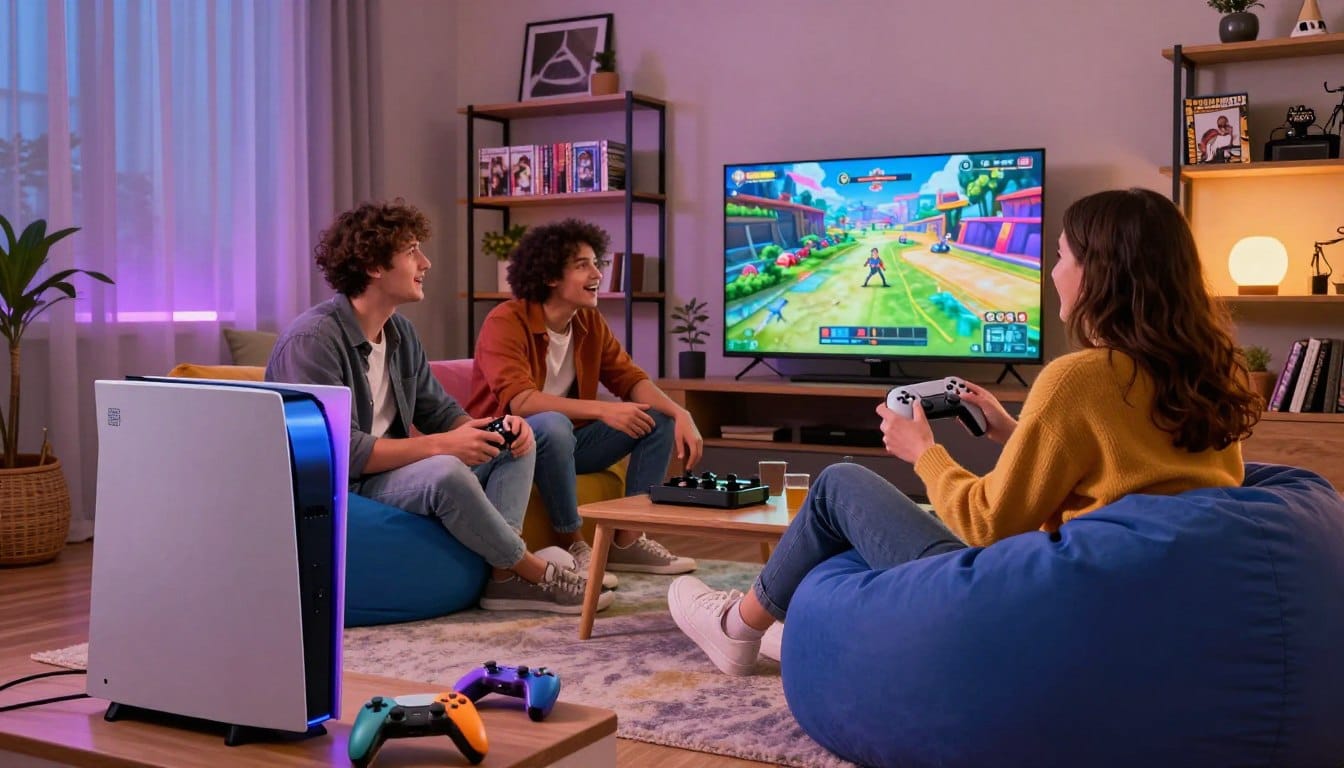
- Try co‑op or local play if you want company while you learn.
Cozy life sims and gentle starters for your first gaming journey

Cozy life simulators make a gentle doorway into play, teaching basic systems without pressure. These titles favor short sessions, clear loops, and warm communities that help you learn while you relax.
Animal Crossing: New Horizons — a welcoming world and simple loops
Animal Crossing eases you into island life with gentle daily tasks: catch critters, plant trees, trade items, and chat with villagers. A huge online community shares tips, designs, and trades, so progress feels social and steady.
Stardew Valley — farm, befriend, and co-op at your pace
Stardew Valley blends farming, town life, light dungeons, and co‑op play. You choose pace and priorities, and working with friends turns chores into shared goals that teach menus, crafting, and time management.
Minecraft — build pressure-free, then try survival
Minecraft’s Creative mode removes stress so you can practice movement, camera control, and building basics. Switch to Survival when you want gradual challenge and a new set of mechanics to learn.
- These titles reward curiosity over speed and teach core things like navigation and crafting.
- Expect steady progress in bite‑sized chunks and satisfying hours of calm play.
- Because they are long-running series with active communities, you’ll find a lot of guides and inspiration.
Bottom line: pick a cozy place, experiment, and enjoy the experience—each game builds skills that carry into other genres and makes gaming feel welcoming to every aspiring gamer.
Puzzle game picks that teach core “gaming language” without pressure

Short, clever puzzles help you learn camera movement, timing, and logical thinking one satisfying solve at a time. These picks use clear feedback and gentle ramps so each solved challenge feels like real progress.
Portal — short, hilarious, and brilliant 3D puzzles that build navigation skills
Portal offers a 2–3 hour campaign of tidy chambers that teach 3D navigation through portals. The witty writing eases tension while controls encourage safe experimentation.
Portal 2 — expands design and co‑op problem solving
Portal 2 deepens puzzle design and adds cooperative chambers that reward communication. Shared solutions turn tricky rooms into collaborative victories.
Professor Layton and the Curious Village
This story‑led adventure pairs hand‑crafted riddles with charming visuals. Layton’s puzzles teach pattern spotting and lateral thinking without pressure.
Phoenix Wright: Ace Attorney Trilogy
Phoenix Wright trains deductive reasoning through testimony and evidence. Narrative cases make each reveal feel earned and very satisfying.
Tetris Effect: Connected
Tetris Effect modernizes a classic with music and visuals that scale difficulty smoothly. It helps players internalize timing and spatial awareness in short sessions.
- Why these work: clear feedback loops, intuitive controls, and short goals build confidence fast.
- They blend story and mystery with approachable design so learning feels playful.
- One solved chamber or cracked case offers a meaningful rush any time you play.
Pick-up-and-play party and family games to share the fun
Quick-hit social titles make it easy to invite people and start playing right away. These picks cut setup and let everyone join with little fuss.
The Jackbox Party Pack — smartphone controllers, instant laughs, and tons of modes
Jackbox uses phones as simple controllers. Players jump into modes like Fibbage and You Don’t Know Jack with no heavy setup. It’s ideal when a living room crowd wants quick rounds and big laughs.
Mario Kart 8 Deluxe — accessible races, local multiplayer, and bite-sized sessions
This franchise shines in short play bursts. Steering and acceleration assists welcome beginners while still letting seasoned players push a higher level of skill.
Rocket League — soccer with cars that teaches teamwork and movement
Free-to-play and cross-platform, Rocket League blends tight control with clear goals: hit the ball and score. It teaches positioning, momentum, and simple team tactics across console and PC options.
- Low friction: join fast and respect your time.
- Simple controllers: phones or basic pads keep complexity down.
- Accessible depth: small wins add up and reward practice.
Bottom line: these three picks offer playful gameplay that connects people and gives every player a clear way to improve a bit each round—perfect for casual gaming and the first tastes of being a confident gamer.
Story-first adventures for players who love characters and worldbuilding

If you love character-driven plots, these narrative adventures put story and atmosphere ahead of flashy mechanics. They welcome beginners with readable prompts, intuitive controls, and moments that linger.
Journey — a quiet, visual pilgrimage
Journey uses music, sand, and light to guide you. Minimal UI and simple movement make exploration feel poetic rather than technical.
Batman: The Telltale Series — choice-led comic mystery
This series emphasizes dialogue and light puzzles. Play as both Bruce Wayne and the Caped Crusader without needing complex combat skills.
Heavy Rain — cinematic stakes, real consequences
Decisions change outcomes and character fates. The branching design shows how narrative weight can rise from a single choice.
Persona 5 Royal — a stylish, patient RPG
Persona 5 Royal pairs step-by-step tutorials with crisp turn-based combat and social systems. It teaches systems gently while rewarding curiosity.
- Why these work: clear prompts, gentle puzzles, and strong characters keep you engaged.
- They show how pacing and choice shape emotional payoff and gameplay skill.
- To explore narrative design more deeply, see this story and design overview.
“A great story in an interactive medium teaches as much about choices as it does about the world.”
games for new gamers: platformers that make movement feel magical

Few genres make motion feel magical like a well‑designed platformer. These titles teach camera use, timing, and route planning while keeping play joyful and forgiving.
Super Mario Odyssey — joyful 3D platforming that builds spatial awareness
Super Mario Odyssey shows how 3D movement can teach camera control and spatial awareness through playful worlds and clever level design. The campaign eases players into combos and vertical navigation so confidence grows naturally.
Shovel Knight: Treasure Trove — tight 2D controls and forgiving checkpoints
Shovel Knight’s precise jumps and generous checkpoints let you learn timing without frustration. Each campaign adds a fresh twist to movement, making practice feel rewarding.
Rayman Legends — vibrant stages that scale from simple to delightfully tricky
Rayman Legends layers challenge gracefully. Simple runs become rhythmic sequences that invite you to try “just one more” stage. Visual clarity and responsive inputs keep focus on flow.
Untitled Goose Game — playful stealth‑slapstick with delightful puzzles
Untitled Goose Game turns mischief into gentle puzzles. Observation, timing, and creative problem solving drive progress in a charming, reactive world.
- Why these work: smart level design nudges you forward; new ideas test out safely, then combine in clever ways.
- Across 2D and 3D, controls feel natural so skills grow alongside confidence.
- They build core fundamentals — jump timing, momentum, and route planning — that carry into many other game genres.
When you’re ready to level up: open worlds and approachable action

These open, inviting titles let you learn by doing—one small victory at a time. They balance freedom with tools that ease you in: clear maps, adjustable assists, and smart tutorials. That makes them ideal when you want a bigger place to explore without feeling lost.
The Legend of Zelda: Breath of the Wild — explore a vast world your way
Breath of the Wild hands you a vast world and says “go.” Physics-driven systems and shrine puzzles teach you to read terrain and experiment with tools. Even a bit of time can yield a shrine or a neat discovery that feels earned.
Skyrim — a role-playing sandbox with countless paths
Skyrim lets you define your role—mage, archer, or brawler—and lose yourself for hours in quests and dungeons. Flexible objectives and diverse play styles mean you learn systems at your own level.
Forza Horizon 5 — open-road driving with friendly assists
Forza Horizon 5 combines exploration and approachable racing. Adjustable assists tune controls to your comfort so high-speed turns feel manageable and fun from the start.
Grand Theft Auto V — a sprawling playground with options
GTA V offers missions, side activities, and online play in a huge sandbox. Handy skip options and varied activities mean you can keep momentum without getting stuck on one tough task.
First-person training wheels: DOOM (2016) and Half-Life 2
DOOM (2016) is a smooth, high-intensity shooter with accessibility choices that suit multiple skill levels. Half-Life 2 pairs shooting, physics, and story to teach first‑person fundamentals with clear feedback and responsive controls.
- Why these work: readable maps, flexible objectives, and assists that scale with skill.
- You learn how systems interact—physics, stealth, enemy behavior—so each discovery builds confidence.
- Short sessions still reward progress: a shrine found, a race finished, or one story beat completed.
“Open worlds are a thoughtful package that respect your playstyle and celebrate curiosity.”
Want to explore different places beyond play? See this short guide to garden types to remind yourself how variety and structure can both feel freeing.
Conclusion
A single inviting pick can turn spare minutes into a steady, joyful habit. Pick what excites you, and the rest will follow.
The best games here were chosen to teach skills gently—movement, timing, and pattern recognition—while offering heart‑felt story and calm loops that respect your time.
Start with one title that fits your mood. In short sessions you’ll build confidence and then try broader video game challenges like open worlds or a light shooter when you feel ready.
Communities and guides make the journey easier. If you want a pleasant hobby beyond play, see a short guide to beginner garden plants to remind you how small steps grow into a rich place of their own.
FAQ
How do I choose a beginner-friendly title that matches my play style?
What does “easy to learn, fun to master” mean for controls and learning curve?
Should I pick console, PC, or mobile as my first gaming system?
Which puzzle titles teach core skills without feeling punishing?
Are life-sim games a good gateway into longer adventures?
What family or party titles work best for short sessions with friends?
How can narrative-driven games help me learn gaming basics?
Which platformers are best for learning movement and spatial awareness?
When should I try open-world or action-oriented titles?
How much time should I expect to invest in these beginner titles?